
As I got closer to my 50th birthday I started to collect newspaper stories about the over-50s. I was going to put them into a light-hearted post with some self-deprecating jokes about putting the punk LPs into storage now I am old enough to go to tea dances, and how I’ll soon need help getting out of the bath.
Then I hit 50 and the joke started wearing thin. I deleted the links I’d saved. I wish I’d kept them, there were some crackers in there which, radicalised by the recent Age of No Retirement conference I could send to the #everydayageism campaign, calling out examples of ageism in the media. I might start by sending them this from yesterday’s Guardian readers’ Q&A with Tracey Emin:
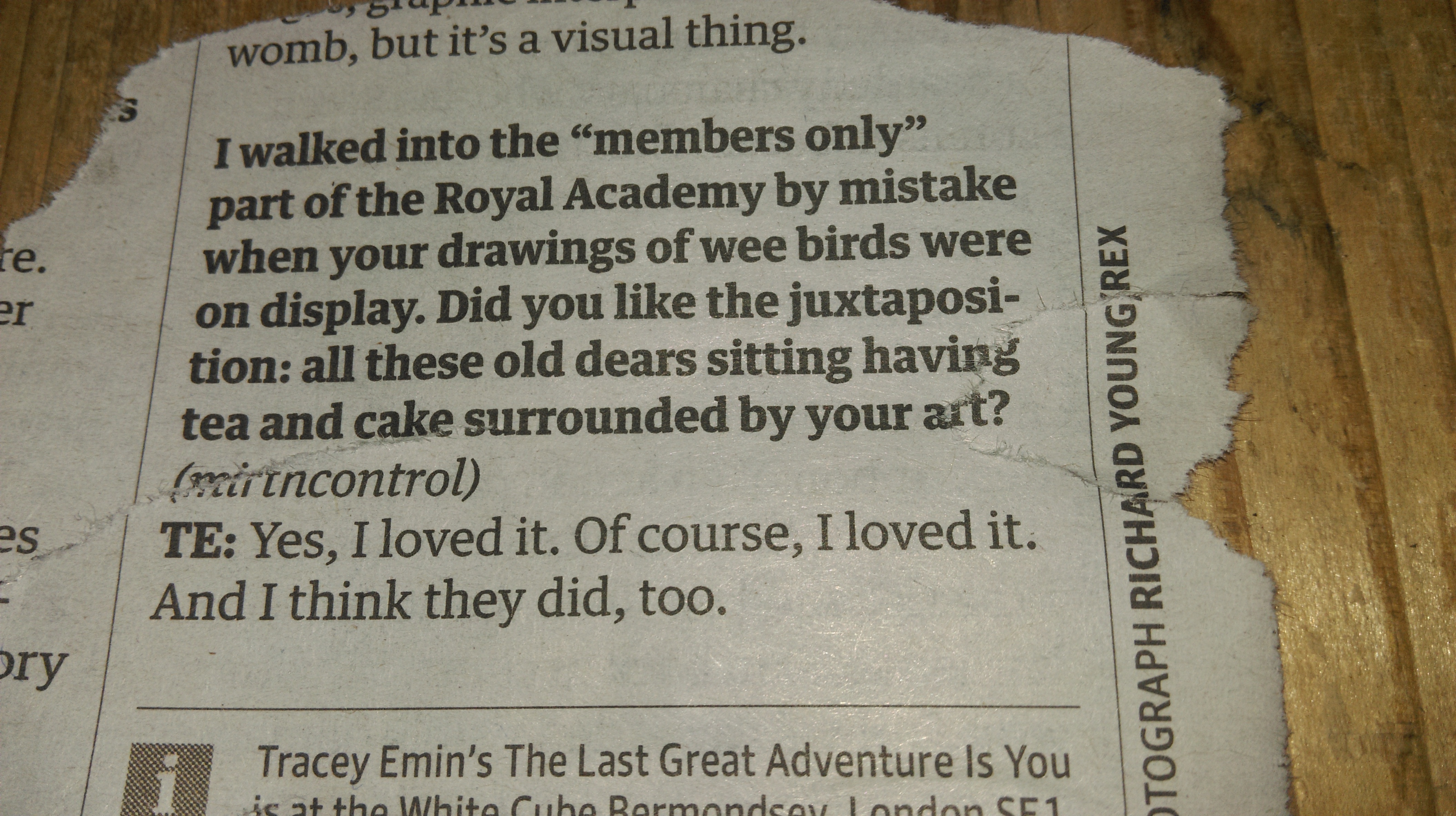
Why “old dears”? – and why shouldn’t they be within touching distance of a Tracey Emin exhibition?
What’s the brand of the over-50s?
In an advertising-drenched age we are used to weighing-up brands whenever we make a purchase. What’s the brand image of the over-50s? What values do you associate with being older? I bet it’s not powerful and dynamic, sexy or daring. And that matters.
“We live in an age where people pity older people and think old women are funny”
commented one debater in a session at the Age of No Retirement conference. That might explain why 2.9million people between 50 and state pension age are currently out of work in the UK, even though many of them would love to carry on working – “employers can smell 50”, as one delegate commented, ruefully.
Bring on the language police
Mary Beard was reported recently calling for the word ‘old’ to be reclaimed:
“I think about it in terms of other kinds of reclamations of vocabulary we’ve had over the years, such as ‘black’ or ‘queer”
She has a way to go. I can think of lots of uses of “old”, none positive – old dear, old fart, old fogey, old maid, old codger. All of them imply staidness – a certain stuck in the mud quality. Doddery-ness. You don’t think of an innovative old dear, an open-minded old codger, an entrepreneurial old bat.
I think old bag has possibilities. I like the idea of embracing my inner battle-axe. But if we’re going to establish “old” as a positive thing – or even a neutral one – we may have to think about banning the others. And while we’re at it, can we do something about some of the other words used about the over-50s? So, no more “silver” (-surfers or -foxes) and a pox on “sprightly” and “young at heart” .
I’m torn about the use of the word “grey” – as in “grey pound” or “grey vote”. Even though grey has been having a bit of a fashion moment recently, it’s hardly a signifier of passion and energy. Anyway, I don’t spend a grey pound, I spend a shiny gold one, just like everybody else. But if we are going to start making advertisers think about the over-50s as anything other than Wonga grannies or knitters of Shreddies, perhaps we have to use the power of the “grey” consumer and flex some financial muscle. £1 in every £5 spent on the high street comes from people over 55 – and there’s good news for marketers, apparently talking to old people doesn’t have to be scary:
Reassuringly, not everything needs to change when targeting 51-70 year olds – they are not that different to younger consumers. Our research shows older consumers are just as willing to change their views, behaviours, brand, and category choices as younger generations. They are also just as likely to spend money and the drivers behind purchases are similar: 51-70 year olds want the best quality, an acceptable price, and a brand that won’t let them down.
Who’d have thought it?
 Sole Trader PR
Well I’ll be 53 soon and this evening am currently sat here in a leopard print onesie complete with a hood with ears from George, chewing gum, dossing on the sofa with my laptop. Browsing facebook and twitter, and texting at the same time, pondering whether to buy a Pandora style bracelet from etsy. Pretty much a carbon copy of your average teenager. Looks like the marketer’s are getting it wrong about us old biddies. Oh and #GBBo – huh, nah I don’t do baking and wouldn’t know one end of a knitting needle from the other.