
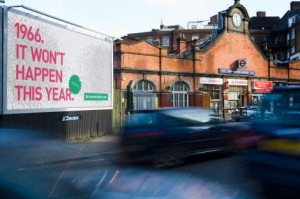
The spoof 1966 ad has been on a billboard across the road for a couple of days now. It makes me smile everytime I see it, although I never did get round to looking up the weblink to find out who was beaming these calming thoughts at my husband and son. I missed the row about the other spoof ad – the working women should all be shot one – until it had all blown over and I stumbled across it on Twitter.
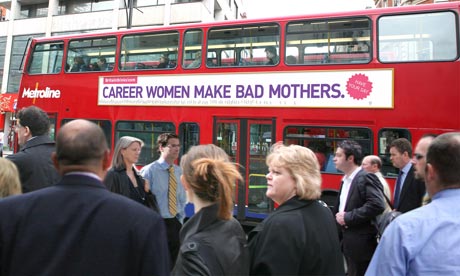
This proves either that a) advertising isn’t as important as the agency wanted to demonstrate; or b) it is, and the Mumsnet row amply demonstrates the point; or c) it only works when backed up with word of mouth – nowadays massively amplified by Twitter and other social networks; or d) I’ve been confined to the house by snow and anxiety for much too long and need to get out more.
Spoof advertising isn’t a new tactic, of course. The Guardian launched a range of non-existant products when online retail really started to take off, to try to prove that people would sign up for anything if it had a website attached. And 1966 has been scooped in the spoof advertising stakes this very month by those hilarious “We can’t go on like this” ads featuring the lollipop-headed David Cameron and some vacuous verbiage about not cutting the NHS. Hats off to them for testing the boundaries of the medium, of course. But can’t help thinking they need to hire someone who knows how to use photoshop and a copywriter (and a policy advisor) who might really be capable of making Britain think.
 Sole Trader PR