
I liked Jonathan Freedland’s piece in today’s Guardian about how the internet has changed the way we think. His list of good outcomes was as you’d expect – the ability to connect with anyone, anywhere; access to more information from further away faster than ever before, permitting the spread of ideas at a rate undreamt of by previous generations.
Freedland’s anti-internet arguments ring true too – more information faster can mean less in depth; information that is updated every few seconds can mean shorter attention spans. He missed, though the thing which is starting to really bug me about the internet – its tendency to reinforce what I already know without surprising me with things that I don’t.
The classic example of this is Twitter’s “people like you” list of recommendations for who to follow. I tweeted, semi-flippantly, the other week that what I need is the ability to build a “people entirely unlike me” list for moments when I’m in need of a good row. I try to widen the range of voices I listen to on Twitter, but if you analyse the list of who I follow it’s still largely metropolitan, left-leaning politically, linked to the industries I work in. There’s nothing wrong with listening to people you agree with, but it becomes problematic if you forget that there are other shades of opinion out there – it’s like being in the pub before a game and then getting to the match and realising the other side has fans too as someone tweeted about campaigning at a local council by-election recently.
The sense of only being offered what you already know you like isn’t confined to Twitter. Anxious to maximise sales, all online retailers highlight things based on your purchasing history (we have recommendations for you...) and on what people with similar taste have chosen (customers who viewed X also viewed Y). Whatever your interests are you can follow them online as long as you know what to search for. But what happens to all the interests you might have but haven’t discovered yet? Search engines only work if you know what you’re looking for – how can I search online for an opinion or a writer or a piece of music to change my life if I don’t already know that it exists?
I don’t agree with Donald Rumsfeld on much, but in one thing at least he was spot on:
There are known knowns; there are things we know we know. We also know there are known unknowns; that is to say we know there are some things we do not know. But there are also unknown unknowns – the ones we don’t know we don’t know.
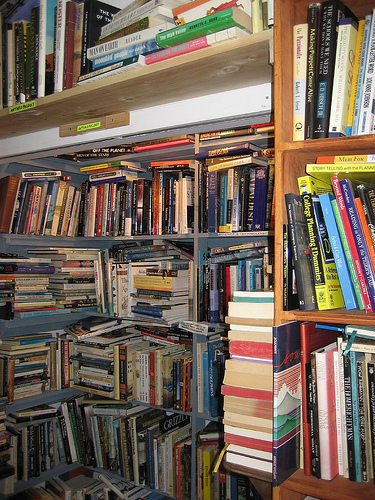
The internet is great at helping with the known knowns and the known unknowns (it’s what Google was invented for). It’s the unknown unknowns I’m interested in; the serendipitous discoveries you can make in an afternoon’s browsing in a proper bookshop or a library; listening to a radio station rather than trusting the genius recommendations on iTunes; finding an unexpected twist to a news story from the pages of a newspaper rather than just scanning the front page online. So, in the spirit of discovery, here’s a list of 100 things we didn’t know in 2010.
 Sole Trader PR