Why customers’ actual experience trumps company process every time

After more than a year of wrangling with our insurance company about water damage in our kitchen we’ve finally given it up as a bad job and thrown ourselves on the mercy of the Financial Ombudsman Service.  Anyone with a gripe about a financial service provider can go to them for adjudication, although we’ve had a letter saying that they will look at our issue within the next six months, so we may not be looking at a speedy resolution.

What’s driving your business – customers or processes?

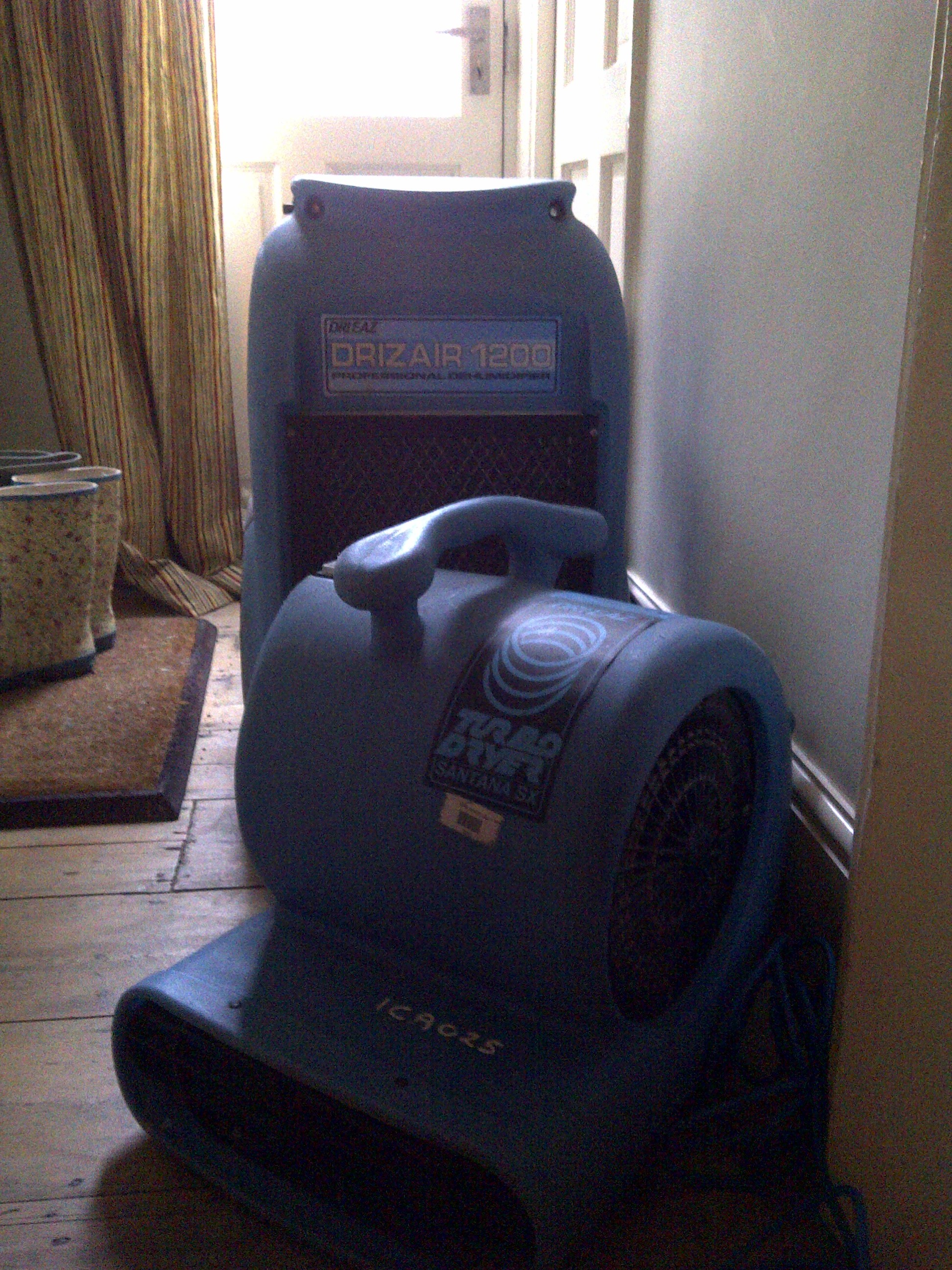
The last straw with the insurers was their response to our final letter of complaint about what had happened.  They were mystified that we didn’t feel they’d done everything possible – despite the fact that 12 months on from lodging the claim our kitchen looks like this:

Home sweet home

They went through each point of our complaint and showed us that at almost each stage their actions were absolutely in line with company expectations, and in the few areas where they had fallen short  teams would be given feedback on how to improve. Our actual experience of what it’s like to deal with them was outweighed by their confidence that the  systems they had set up had worked as intended.  There was such a total failure to see the situation from their customers’ perspective that it would have been funny – except it leaves me still hoovering brick dust off the stairs.

The customer defection capital of the West

The  focus on internal business process rather than the actual experience of real live customers must be the very definition of bad customer service.  Complaints, though difficult to hear, should be  valuable in showing where systems are failing.  They’re not personal assaults to be fended off at all costs.

Insurance companies – like any other businesses – should think about the cost of customer churn  to their bottom line. The Institute of Loss Adjusters has a piece on its website describing the UK as the customer defection capital of the West – and suggests that insurance companies in the UK are worse than their European or US counterparts for the rate at which customers decide to move on.  They should bear in mind that it costs  more to recruit a new customer than it does to retain an existing one.  Good customer service is how you hold on to customers who are otherwise willing and able to take their business elsewhere.

 

5 Tips For Delivering Good Customer Service

Drying out the walls

Five pieces of free advice for customer services departments, hard-won from five months dealing with my buildings insurance company…

1.  Make it easy for your customers to talk to you.  This is  the 21st century.  Embrace it.  Use email.   If you INSIST on using snail mail to conduct your business, build in some way of letting people know that  letters have arrived – you could do it via email!

2.  One person dealing with an issue helps your customers feel more secure.  Insurance claims can be complicated and take a while to sort out.  It would help your customers’ blood pressure if they had one person to deal with, rather than having to repeat the same information every time they speak to you.  Oh, and sending out letters giving the name of “your personal claims adviser” and sending a different name every time doesn’t help.  

3.  Keep your customers informed.  If they’re contacting you about a building insurance claim, something drastic has happened to their home.  That’s their biggest asset and the possession in which they have most invested emotionally as well as financially.  They want to know  you’re on their side.  They want to know what’s happening and they want to understand a process which they might never have had to deal with before.  Tell them what’s going on.  Don’t make them chase you for information.  Don’t assume they know what’s going to happen.  Put stuff in writing.  There is more information on my insurers’ website about how to buy a toy version of their  mascot than there is about what might happen if you need to make a claim.

4. Make it easy for your customers to tell you how they feel.   I mentioned the fact that I didn’t know what was going on with my claim when I was on the phone to them a couple of weeks ago – just after I’d had a phone call out of the blue from a “disaster recovery company” confirming that they would be coming to the house the next day to install their equipment.  I’ve now had an email request  to give the insurers the details of my “complaint” so that they can improve their service in future.  Which is nice.  Except the email just links to a standard multiple choice form about how satisfied I was (or was not) with the member of staff who dealt with my complaint.  It’s not the staff I’m worried about, it’s the  process that needs changing.  There is nowhere for me to tell them what I’m concerned about. It looks like a tick-box exercise, not a serious attempt to engage with a problem.

5.  Communicate  Actually all of this boils down to one piece of advice.  Communicate with your customers.   Put yourself in their shoes.  Mentally walk through the process your company asks your customers to go through when they deal with you.  What would you like to know at the beginning, middle and end of the process?  How would you want to be dealt with while it’s grinding on?  Do that.  It’s not hard.  A nodding dog should be able to do it.

Letting off steam about public services…

Sometimes I just blog to get things off my chest.  You are excused reading this if you don’t want to, this one’s really for my benefit.  If you stick with it there may be a moral at the end.

So, here we go.

Last week I tweeted light-heartedly about how ridiculous it was to need three forms of ID to get Tower Hamlets council to condescend to sell me a  parking permit for outside my house.  Especially as, despite having my council tax bill with me as ID, the computer insisted that my house wasn’t a residential property so wasn’t eligible for resident’s parking (so can I have the tax back?)   Leave it a couple of days, I was told, come back at the end of the week.  We’ll have found your house by then and we’ll sell you what you want.

Went back on Saturday because the form downloaded from TH’s website told me they were open all morning – to find the office locked and a closed until Monday sign swinging in the door.

Went back today.  Computer has found my house.  Sadly none of the three forms of ID I have with me (including the utility bill and the council tax bill they ask for), have my first name as well as surname and address  on them, and the things that do – library card (issued by TH council) bank cards – they won’t accept as valid forms of ID.

So they won’t let me apply to buy a parking permit.

And I swept out in high dudgeon.

And the moral of the story is

  • Life would be easier if we had one form of ID accepted as standard proof everywhere.  Thanks to the mis-handling of ID cards by the last government this is unlikely to happen in my lifetime (which may be considerably shortened by the hike I experience in my blood pressure every time I need a parking permit.)
  •  Customer service matters. Tower Hamlet’s council does a good job on the big stuff.  If asked as I left the office this morning, however, I would unhesitatingly have voted for it to be overthrown in a bloodless coup (can you vote for a coup?) on the grounds of  extreme jobsworthy-ness.   Doesn’t matter how efficient the back office functions of a business are; if the points at which customers come into contact with it don’t work then the business is undermined.  This is great customer service.  Repeatedly telling a frustrated customer that you won’t sell her something because she hasn’t brought her passport with her, is not.

According to their complaints procedure, TH welcomes complaints from residents aged 5 upwards because it helps them improve their service.  But of course I won’t complain.  This is not the kind of thing people complain about. It isn’t a major injustice, it doesn’t affect my children’s schooling or the care of elderly relatives, it’s just another minor irritant to be dealt with so that my sister can park when she visits.

Thank you for listening.  That feels much better.

Excellent, very good, good, fair or poor?

Out shopping yesterday, nipped into the bank to pay in a couple of cheques.  A researcher from the bank called me this morning to check how my transaction had gone.  How often did I use that branch of the bank?  Would I recommend the branch to other people?  How likely was I to buy financial products or services from that branch?  Did I trust it to offer me financial advice  in my best interests?  The researcher giggled when I told her, slightly bemused, that I just happened to be passing that branch when I remembered that I had a cheque to pay in –  it isn’t as though I keep a mental list of favourite bank branches I have used in the past. But she had a quota of calls to make so we ploughed on.  How long had I waited to be served?  Had the person behind the counter been polite to me?  Called me by my name?  Handled my query without being interrupted by other members of staff?   What suggestions could I make to improve the experience of using that branch of the bank?  I refrained from suggesting that they could do fewer customer surveys and use the money to pay a better rate of interest on their current accounts, and simply assured her that I thought the Canary Wharf branch of Lloyds is just fine and dandy as it is, and thanks for caring what I think.

Things have changed hugely in customer service  in the past decade, and thank god for that. I started my working life in the theatre and vividly remember trying to get the box office and stage door staff to do some customer-service training on the grounds that we might do better if we didn’t frighten off one potential customer in every three by being rude to them.  Sue, the scarily truculent stage door keeper, refused point-blank to do the training on the grounds that “I don’t work in Disneyland.  This is not America”.  I wonder how long she lasted (and what she would make of being asked to rate her experience of using a Creditpoint). I’m all in favour of  improving customer service, and of gathering feedback from customers to make sure it’s happening.  Can’t help thinking that Lloyds are taking things just slightly too far.

Your call is important to us…

My dishwasher broke down a couple of weeks before  Christmas and when…  Well you really don’t need or want to know the ins and outs of this  story.  Here I am still waiting for it to be fixed, one month and four, soon-to-be five re-arranged engineer-vists later.    Idly holding on the phone to speak to the helpline again this afternoon, I googled Hotpoint Customer Service, and found  a whole circle of Hell, populated with people frothing at the mouth and desperate to share their experiences.  The online comments might eventually have some impact on the company’s behaviour –  if enough people check things out online before they buy and are put off by what they find.  But it did make me  realise how very puny the power of the customer still is – there are comments on some of these blogs dating back to 2006, but Hotpoint/Indesit ploughs on serenely, not apparently seeing the need to change its ways one jot.  For what it’s worth I will be adding my rants to the other blogs, but more because it will help me unload some rage than because I expect it to do any good.

Thank you for holding.