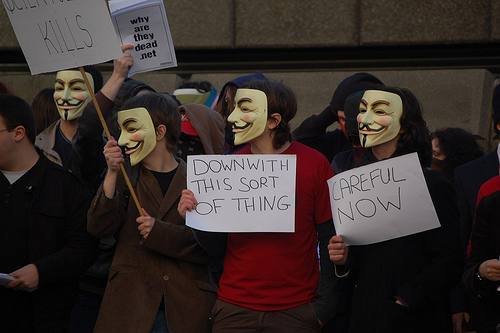
The NI guide to crisis communications in 5 easy steps

In years to come the News International phone hacking saga will be taught on PR courses as a textbook case of how not to handle a PR crisis.  Here’s why:

1.  Caught in a crisis the response should  be quick, consistent and open.  NI let the story about hacking rumble on for months, claiming all the while that it was a problem with one rogue operator.  Sticking to an incomplete story is a guarantee of greater problems down the line when the full story comes out.  Which it will.  ‘Fess up straight away if you’re in the wrong, it gives you some control over the story if it isn’t dribbling out over a long period as new allegations arise.  Most experts agree that  an attempted cover up can cause bigger headaches than the original sin.

2. If you’re in the wrong, apologise – fully and sincerely, and start talking about what changes you’re going to make to ensure that this never happens again. Presumably under the influence of their new PR company, NI are now set to run full-page ads in the papers apologising for what’s happening.  Rebekah Brooks’ initial statement declaring that it was inconceivable that she knew about hacking Milly Dowler’s phone fell several miles short of what was required.

Until the new PRs got to work, there hadn’t been much in the way of apology to the victims from anyone at NI.  Today’s meeting between Rupert Murdoch and Milly Dowler’s family may be a first step to recognising that this is a tactical mistake (as well as being morally indefensible…)

3. A bit of humility doesn’t hurt.  James Murdoch’s refusal to appear before the  Select Committee because the date was inconvenient was cringeworthy. Worse was Rupert’s apparent insistence to the Wall St Journal that the company had been handling the issue extremely well.

4.  Think about the information that everyone involved will need.  This includes regulators, customers, investors, suppliers, victims  and – a crucial group that NI has rather ignored – your own staff.  Former News of the World staff, sacked a week before Rebekah Brooks felt compelled to go, may feel this element of the crisis could have been better handled…

and most importantly

5. You need to be prepared.  NI don’t seem to have had a Head of Comms working on this until this January. so no wonder their responses have been flat-footed.  It’s worth:

  • Having a regular health check of the business to see where problems might arise and do scenario planning to see how you’d cope if the worst happened
  • Having a  team in place to manage a crisis, with people who are sufficiently senior to be able to take quick decisions without having to refer to managers
  • Identifying a media-trained spokesperson to deal with enquiries to ensure a consistent message gets through
  • Remembering the power of the non-traditional media.  Think how you’d deal with Twitter or Facebook in full flow…
  • Practising.  Running the odd “pretend crisis” session will test the systems you’ve put in place and make sure they’re robust.
Letting off steam about public services…

Sometimes I just blog to get things off my chest.  You are excused reading this if you don’t want to, this one’s really for my benefit.  If you stick with it there may be a moral at the end.

So, here we go.

Last week I tweeted light-heartedly about how ridiculous it was to need three forms of ID to get Tower Hamlets council to condescend to sell me a  parking permit for outside my house.  Especially as, despite having my council tax bill with me as ID, the computer insisted that my house wasn’t a residential property so wasn’t eligible for resident’s parking (so can I have the tax back?)   Leave it a couple of days, I was told, come back at the end of the week.  We’ll have found your house by then and we’ll sell you what you want.

Went back on Saturday because the form downloaded from TH’s website told me they were open all morning – to find the office locked and a closed until Monday sign swinging in the door.

Went back today.  Computer has found my house.  Sadly none of the three forms of ID I have with me (including the utility bill and the council tax bill they ask for), have my first name as well as surname and address  on them, and the things that do – library card (issued by TH council) bank cards – they won’t accept as valid forms of ID.

So they won’t let me apply to buy a parking permit.

And I swept out in high dudgeon.

And the moral of the story is

  • Life would be easier if we had one form of ID accepted as standard proof everywhere.  Thanks to the mis-handling of ID cards by the last government this is unlikely to happen in my lifetime (which may be considerably shortened by the hike I experience in my blood pressure every time I need a parking permit.)
  •  Customer service matters. Tower Hamlet’s council does a good job on the big stuff.  If asked as I left the office this morning, however, I would unhesitatingly have voted for it to be overthrown in a bloodless coup (can you vote for a coup?) on the grounds of  extreme jobsworthy-ness.   Doesn’t matter how efficient the back office functions of a business are; if the points at which customers come into contact with it don’t work then the business is undermined.  This is great customer service.  Repeatedly telling a frustrated customer that you won’t sell her something because she hasn’t brought her passport with her, is not.

According to their complaints procedure, TH welcomes complaints from residents aged 5 upwards because it helps them improve their service.  But of course I won’t complain.  This is not the kind of thing people complain about. It isn’t a major injustice, it doesn’t affect my children’s schooling or the care of elderly relatives, it’s just another minor irritant to be dealt with so that my sister can park when she visits.

Thank you for listening.  That feels much better.

He Came, He Saw, He Conquered

Power is very rarely limited to the pure exercise of brute force…. [T]he Roman state bolstered its authority and legitimacy with the trappings of ceremonial –cloaking the actualities of power beneath a display of wealth, the sanction of tradition, and the spectacle of insuperable resources….Power is a far more complex and mysterious quality than any apparently simple manifestation of it would appear. It is as much a matter of impression, of theatre, of persuading those over whom authority is wielded to collude in their subjugation. Insofar as power is a matter of presentation, its cultural currency in antiquity (and still today) was the creation, manipulation, and display of images.

Good writing saves lives

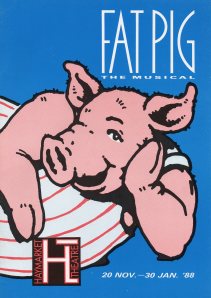
The news story that instructions on medicine bottles are being re-written because people find the language they use too complicated, took me back to my first proper job, writing copy for the publicity department of a regional theatre.  I was laughed out of the room for suggesting that we should change the phrase “affix stamp to envelope” on the  letter sent with the season’s brochure to “please use a stamp”.  Affix was the ‘proper’ word to use.  That’s what we were going to stick with.  It was evidently more important to them to sound posh than be understood.  (They also veto-ed my suggested tagline – It’s Swine-sational! – for a Christmas musical based on the children’s book, Fat Pig.  They were idiots and didn’t deserve me.  But it’s OK, I’m over it now.  Really.)

The standard advice given on copywriting courses is to remember that the average reading age of adults in this country is about 11, so you need to  KISS (variously Keep It Simple, Stupid; Keep It Simple, Silly; or Keep It Short and Simple depending on the whim of the trainer).

Writing short, snappy, clear copy that’s  fun to read and sells a product – or gives advice about how to use a medicine properly –  is much harder than it looks.  Maybe that’s why there is so much copywriting advice available online.  The American site Copyblogger is one of my favourites – its 10 steps to becoming a better writer advice is spot on.  I subscribed to Naomi Dunford’s newsletter for a while, even though it wasn’t particularly relevant for my business, because I liked her bracing “get off your ass and get down to work” style.

Copywriting really matters.  Poor writing skills will lose you contracts, customers and sales.  There’s some good advice here about ways to improve your writing – the most effective tip is simply to read.  Lots.  Of all kinds of different writing.  Think about what you enjoy and try to understand why it works.  And if it doesn’t work, try to understand that too.  Medicine bottle-labellers are doing that right now.  Who knows.  If they find the right words it might save someone’s life.

In praise of the unknown unknowns

Flickr: dweekly

I liked Jonathan Freedland’s piece in today’s Guardian about how the internet has changed the way we think.  His list of good outcomes was as you’d expect  – the ability to connect with anyone, anywhere;  access to more information from further away faster than ever before, permitting the spread of ideas at a rate undreamt of by previous generations.

Freedland’s anti-internet arguments ring true too – more information faster can mean less in depth; information that is updated every few seconds can mean shorter attention spans.  He missed, though the thing which is starting to really bug me about the internet  – its tendency to reinforce what I already know without surprising me with things that I don’t.

The classic example of this is  Twitter’s “people like you” list of recommendations for who to follow.  I tweeted, semi-flippantly, the other week that what I need is the ability to build a “people entirely unlike me” list for moments when I’m in need of a good row.  I try to widen the range of voices I listen to on Twitter,  but if you analyse the list of who I follow  it’s still largely metropolitan, left-leaning politically, linked to the industries I work in.   There’s nothing wrong with listening to people you agree with, but it becomes problematic if you forget that there are other shades of opinion out there – it’s like being in the pub before a game and then getting to the match and realising the other side has fans too as someone tweeted about  campaigning at a local council by-election recently.

The sense of only being offered what you already know you like isn’t confined to Twitter.  Anxious to maximise sales, all online retailers  highlight things based on your purchasing history (we have recommendations for you...) and on what people with similar taste have chosen  (customers who viewed  X also viewed Y).  Whatever your interests are you can follow them online as long as you know what to search for. But what happens to all the interests you might have but  haven’t discovered yet?  Search engines only work if you know what you’re looking for – how can I search online for an opinion or a writer or a piece of music to change my life  if I don’t already know that it exists?

I don’t agree with Donald Rumsfeld on much, but in one thing at least he was spot on:

There are known knowns; there are things we know we know. We also know there are known unknowns; that is to say we know there are some things we do not know. But there are also unknown unknowns – the ones we don’t know we don’t know.

The internet is great at helping with the known knowns and the known unknowns (it’s what Google was invented for).  It’s the unknown unknowns I’m interested in; the serendipitous discoveries you can make in an afternoon’s browsing in a proper bookshop or a library; listening to a radio station rather than trusting the genius recommendations on iTunes; finding an unexpected twist to a news story from the pages of a newspaper rather than just scanning the front page online. So, in the spirit of discovery, here’s a list of 100 things we didn’t know in 2010.

Excellent, very good, good, fair or poor?

Out shopping yesterday, nipped into the bank to pay in a couple of cheques.  A researcher from the bank called me this morning to check how my transaction had gone.  How often did I use that branch of the bank?  Would I recommend the branch to other people?  How likely was I to buy financial products or services from that branch?  Did I trust it to offer me financial advice  in my best interests?  The researcher giggled when I told her, slightly bemused, that I just happened to be passing that branch when I remembered that I had a cheque to pay in –  it isn’t as though I keep a mental list of favourite bank branches I have used in the past. But she had a quota of calls to make so we ploughed on.  How long had I waited to be served?  Had the person behind the counter been polite to me?  Called me by my name?  Handled my query without being interrupted by other members of staff?   What suggestions could I make to improve the experience of using that branch of the bank?  I refrained from suggesting that they could do fewer customer surveys and use the money to pay a better rate of interest on their current accounts, and simply assured her that I thought the Canary Wharf branch of Lloyds is just fine and dandy as it is, and thanks for caring what I think.

Things have changed hugely in customer service  in the past decade, and thank god for that. I started my working life in the theatre and vividly remember trying to get the box office and stage door staff to do some customer-service training on the grounds that we might do better if we didn’t frighten off one potential customer in every three by being rude to them.  Sue, the scarily truculent stage door keeper, refused point-blank to do the training on the grounds that “I don’t work in Disneyland.  This is not America”.  I wonder how long she lasted (and what she would make of being asked to rate her experience of using a Creditpoint). I’m all in favour of  improving customer service, and of gathering feedback from customers to make sure it’s happening.  Can’t help thinking that Lloyds are taking things just slightly too far.

A pedant writes

I’ve been doing a lot of editing recently – it’s annual report season and the hills are alive with the sound of management-speak being committed to paper.

Don’t get me wrong – I’m very glad of the work.  And I do appreciate that great managers aren’t necessarily good writers too.  But in the interests of the English language and my own sanity, can I request that the person who wrote “we are fully committed to embedding and mainstreaming equality and diversity in all our management processes” is sent to the corner wearing a  very large dunce’s cap and left to contemplate the error of his ways (or her ways – I am, of course,  fully committed to…)

A pox on embedding and mainstreaming; on the random use of transparent, robust and sustainable to make simple things sound grander than they need to be; on  capturing learnings and sharing them at learning events; on the direction of travel and ongoing commitment and outcome focused engagement activity.

This whole editing process  reminds me of skills I used to take  pride in, which are now about as useful  as knowing how to ride a pennyfarthing or where to apply the leeches to cure dropsy. I used to be  able to lay out a page of newsprint, using a series of  mathematical formulae which told the printer exactly where and at what size to place the words and pictures.  I knew how to put together documents for print by cutting in alterations from a block of set type with a scalpel.  I could correct a proof using the right set of editor’s marks.  (Yes I know.  I’m older than God) .

Now editing and proofing is an entirely on-screen process which is infinitely easier and much less satisfying than it used to be.   Who knew you could feel nostalgic for the feel of printers’ proofs?

The good stuff for March: social media

I’m aware that this post could be like announcing the invention of the printing press to a convention of librarians.  However,  I’m so far from being expert in the area of social media that I need constant memory-joggers about the useful stuff that’s out there – or stuff that’s useless but fun.  Maybe you do too?  Here’s a random selection of what I unearthed this month…

Saving the world one click at a time

Fllickr: Sean Stayte

I’ve received several requests to sign online petitions to Save the BBC.  The petitioners seem to think that any cut to the BBC is an absolute outrage to be resisted until death – even if it is being proposed by the BBC itself, which does have a vested interest in its own survival.   In classic BBC fashion, they seem to have chosen the wrong things to cut – the good bits that the market isn’t  providing – but I can’t see that it’s wrong to admit that the BBC can’t do everything and scale back.  A pre-emptive strike against cuts being imposed from outside, perhaps? (And personally I hate and rarely use the BBC website, so big, so bland, so smug.  It should have been pruned years ago).

I haven’t signed the petitions, although I love the BBC for all its faults.  It’s the fizzing outrage of the emails that puts me off.  There’s no nuance in the argument, no recognition that there may be more than one side to be considered.  At least one of the organisations that petitions me for support, regularly asks for suggestions as to what I want them to protest about next.  It’s  as though it’s the  act of complaining that’s important,  the opportunity to vent about everything that’s wrong in the world, rather than doing the difficult and often dull work of bringing about real change.   A classic armchair warrior, I’ve clicked yes to petitions for Amnesty, Reprieve and Friends of the Earth,  pro-democracy in Burma, anti-homophobia in Uganda and  lots more that I can’t remember.  What happens to it all?  Is this real democracy in action, or  knee-jerk populism?  And, as one post on the Guardian’s 6Music story remarked, is it just me, or are Facebook and Twitter now running the country?