Experience never gets old – a lesson from Hollywood?

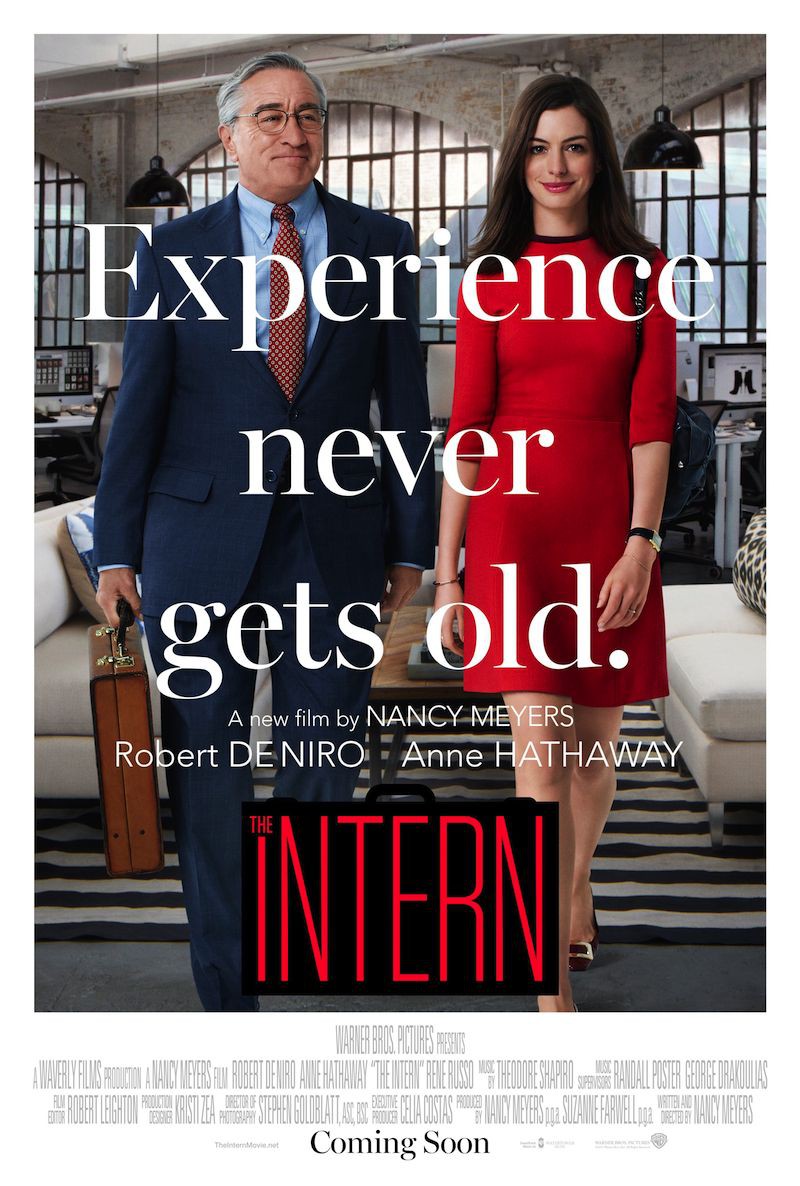
20150929060100!The_Intern_PosterI have been spending far more time than is healthy thinking about the tag- line to the new De Niro film, The Intern. “Experience never gets old”.

What on earth does it mean?

The Experience thing I get. In the film De Niro is a 70-year old returning to work as an intern – no doubt with hilarious consequences. (I haven’t seen the film, I have no idea.) He has lots of experience. You could replace the E-word with Wisdom maybe, or Maturity – although the idea that Maturity never gets old sounds even weirder.

It’s the old bit I don’t get. What does it mean? Experience is never out of date – demonstrably wrong: my experience of using fax machines in the 1990s is pretty old hat these days. Experience never goes stale – ditto.  Experience never ages – still meaningless.  I have a feeling that the subtext here is: it’s OK to be old and still go to work – look old people have things to offer too! I have changed my mind three times in the last ten minutes trying to decide whether – if that is the message – it’s a patronising or a positive one. But it only works if  the very notion of being old is undesirable – as if what they were really trying to say was Experience never has a senior moment and forgets where it put the scissors but they knew that just didn’t sound right.

“It’s only the poster for a Hollywood film” I hear you cry. “Lighten up.”

But a) in Hollywood terms I’m as old as the hills and extremely sensitive to implied ageism; and b) I’m a copywriter.  Words matter. Also, because I’m a copywriter, I know that every syllable of every word on that poster has been carefully thought about and focus-grouped by a crack team of writers, publicists and designers – none of this stuff happens by accident, or because that was just the best they could come up with before the print deadline.

So, Experience never gets old means something to someone.  But what?

Internal execution – the language of recruitment

There is a language spoken by recruitment consultants that possibly only they understand.  From this morning’s  jobs bulletin from Timewise:

Salary £50K FTE and excellent benefits.

Our client is a blue chip FMCG organisation, this person will internally, develop and lead all brand marketing strategies from an in-store perspective and externally execute the category and brand strategies in-store.”

101 words of advice – what Star Wars teaches copywriters

Discussing the shortcomings of the Star Wars films over breakfast (we’re a cultured family) my husband claimed that Harrison Ford once waved his script at George Lucas snarling: “you know George, you can type this stuff, but you sure as hell can’t say it.”

And that, ladies and gentlemen, is as good a definition of bad writing as I’ve heard.  It’s stuff you can’t say when you read it out.  Dense and knotty, sprouting jargon in every dangling clause, bad writing defeats good actors and casual readers alike.

Write it.  Cut it.  Cut it again.  Read it aloud.  You’ll be amazed.

Five business terms to ban in 2012

Loved this Freelance Switch post on Words which should be banned in 2012.  Pedants click on the link and agree – but not before you’ve added to my own top 5 candidates of business terms which should be retired this year:

  • Robust meaning ‘effective’ or ‘thorough’ – as in “we need to design a robust process for dealing with this issue”.  Oddly it’s a public service favourite which doesn’t yet seem to have made the leap to the private sector, where they seem more concerned with…
  • Granular/ granularity  meaning ‘specific’ or  ‘detailed’- as in: “we need to get to a really granular level of detail on this”.
  • Thought leadership – unacceptable in any circumstances, ever.
  • Engage with meaning ‘speak to’
  • Stakeholder – incredibly ugly and much over-used.  Irritatingly it’s also incredibly useful.  Work to do to come up with a better alternative.

Passionate and Solution have been dealt with elsewhere on this blog, as has Mumpreneur, but sadly all three persist like Japanese knotweed.  It’s almost as if no-one pays any attention to what I say…

The value of proof-reading

From the email jobs board (names suppressed to protect the guilty):

Acting as an ambassador for the Group Communications function you will work across a wide range of internal and external communications. You will be working with some of the most talented and influential figures in the publishing field with the opportunity to create ties with the company’s impressive global afflictions.

Whatever that client is paying that recruitment consultancy is far, far too much.

And now, something for the laydeez

I did some work last month researching gadget-review blogs and new technology sites for a company poised to bring a new product to market.  The world of the self-confessed geek and the gadget-obsessed is still overwhelmingly male,  but I did stumble across one blog, aimed squarely at the fairer sex, which boasted an array of stories designed to tempt us into the boys’ lair:
  • Pink moisture glasses keep your eyes refreshed
  • Versetta iPad handbag doubles as a workstation
  • Ultimate beauty iPhone app saves you time in Selfridges
  • Jawbone wristband tracks your diet, exercise and sleep
  • Burg 5 watch, even in pink, fails to tick right boxes
  • HTC set to release Glamour smartphone just for women
  • Microsoft reveals the Comfort Keyboard
  • iPad kangaroo pouch coming soon

I guess this either makes you laugh hysterically or it doesn’t.*

It reminded me of an old piece by Alan Coren about a new car aimed at the “typical female” customer  which failed because:

at 35mph the linkage connecting the hairdryer to the eye-level grill snapped, disconnected the telephone and threw the crib through the windscreen.  Upon applying the brakes the driver inadvertently set the instant heel-bar in motion and was riveted to the wardrobe by a row of tin tacks.

I suppose at least he had the excuse of writing in 1974, some time before feminism got into its stride (and of being a comic genius who rarely put a foot wrong).  Not sure what the bloggers’ excuse is.

* these are real stories from a real blog, which I’m not linking to because it doesn’t deserve the traffic

Good writing saves lives

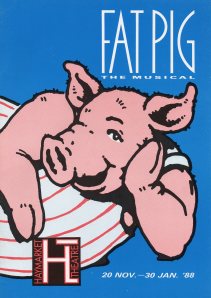
The news story that instructions on medicine bottles are being re-written because people find the language they use too complicated, took me back to my first proper job, writing copy for the publicity department of a regional theatre.  I was laughed out of the room for suggesting that we should change the phrase “affix stamp to envelope” on the  letter sent with the season’s brochure to “please use a stamp”.  Affix was the ‘proper’ word to use.  That’s what we were going to stick with.  It was evidently more important to them to sound posh than be understood.  (They also veto-ed my suggested tagline – It’s Swine-sational! – for a Christmas musical based on the children’s book, Fat Pig.  They were idiots and didn’t deserve me.  But it’s OK, I’m over it now.  Really.)

The standard advice given on copywriting courses is to remember that the average reading age of adults in this country is about 11, so you need to  KISS (variously Keep It Simple, Stupid; Keep It Simple, Silly; or Keep It Short and Simple depending on the whim of the trainer).

Writing short, snappy, clear copy that’s  fun to read and sells a product – or gives advice about how to use a medicine properly –  is much harder than it looks.  Maybe that’s why there is so much copywriting advice available online.  The American site Copyblogger is one of my favourites – its 10 steps to becoming a better writer advice is spot on.  I subscribed to Naomi Dunford’s newsletter for a while, even though it wasn’t particularly relevant for my business, because I liked her bracing “get off your ass and get down to work” style.

Copywriting really matters.  Poor writing skills will lose you contracts, customers and sales.  There’s some good advice here about ways to improve your writing – the most effective tip is simply to read.  Lots.  Of all kinds of different writing.  Think about what you enjoy and try to understand why it works.  And if it doesn’t work, try to understand that too.  Medicine bottle-labellers are doing that right now.  Who knows.  If they find the right words it might save someone’s life.

A pedant writes

I’ve been doing a lot of editing recently – it’s annual report season and the hills are alive with the sound of management-speak being committed to paper.

Don’t get me wrong – I’m very glad of the work.  And I do appreciate that great managers aren’t necessarily good writers too.  But in the interests of the English language and my own sanity, can I request that the person who wrote “we are fully committed to embedding and mainstreaming equality and diversity in all our management processes” is sent to the corner wearing a  very large dunce’s cap and left to contemplate the error of his ways (or her ways – I am, of course,  fully committed to…)

A pox on embedding and mainstreaming; on the random use of transparent, robust and sustainable to make simple things sound grander than they need to be; on  capturing learnings and sharing them at learning events; on the direction of travel and ongoing commitment and outcome focused engagement activity.

This whole editing process  reminds me of skills I used to take  pride in, which are now about as useful  as knowing how to ride a pennyfarthing or where to apply the leeches to cure dropsy. I used to be  able to lay out a page of newsprint, using a series of  mathematical formulae which told the printer exactly where and at what size to place the words and pictures.  I knew how to put together documents for print by cutting in alterations from a block of set type with a scalpel.  I could correct a proof using the right set of editor’s marks.  (Yes I know.  I’m older than God) .

Now editing and proofing is an entirely on-screen process which is infinitely easier and much less satisfying than it used to be.   Who knew you could feel nostalgic for the feel of printers’ proofs?