Advertising, age and the #maninthemoon

Man on the moonYou may as well try to hold back the tide as ignore the cultural message-making that surrounds the Man In The Moon John Lewis ad.  It’s still all over twitter like a cheap suit, the marketeers have plastered LinkedIn with comments pro- and anti- and newspapers with space to fill are commissioning pieces about what it says about loneliness.  So I’m sacrificing the high ground, and joining in.  Here are just some of the things I hate about the advert – as though it matters – with inspiration from the ghost of semiotician Roland Barthes, born 100 years ago this very week:

  1. The stereotypical portrayal of older people. The old man is lonely, sad and needs rescuing by a child. Undoubtedly many older people are extremely lonely, but many are not.  We could do with some positive images in adverts as well as the helpless and isolated.  Why couldn’t he have been befriended by the child’s granny?  She could be a happy, smiley woman who’s central to her own extended family. She could help the child make sense of the old man’s plight – and suggest how to help.
  2. It’s a non-solution solution to loneliness.  The present sent to the old man allows him to look in through the window of the child’s house. He’s clearly not invited to join the family for tea. This probably makes the givers (us) feel a whole lot better than the receiver who is, after all, still left out in the cold. Maybe a very long slide from the John Lewis toy department could have been extended to his lonely eerie by smiley Granny and they could have slid back to the Christmas party together in a daring whoosh of jollity, fun, and a flash of support stockings. But would bringing him into the house have raised too many awkward issues about how far we are actually prepared to go to alleviate loneliness at Christmas?
  3. Marketing trumps social conscience. I strongly suspect that, however well Age UK will do out of the ad, John Lewis will do a whole lot better. Age UK doesn’t get a name check anywhere on the advert. It will benefit from a ‘text £5’ fundraising campaign and from 25% of the sales of a mug with the campaign logo on it. There’s a range of other stuff available which is linked to the campaign, but it looks like Age UK only get a cut of the profits on the mug and a card. There’s absolutely nothing wrong with John Lewis wanting to make money at Christmas.  I just feel a bit queasy about the holier than thou tone it takes while it’s doing it.
  4. Worthiness trumps fun.  There’s not a hint of wit or laughter or real warmth in the whole 2 minutes.  Nothing to make me crack a smile never mind make me feel well disposed to the notion of Christmas shopping. Next year, John Lewis, your challenge is not to alleviate suffering or bring world peace, it’s to make me smile. Go on. I dare you.
  5. As previously stated. It’s an advert. For a shop. Designed to make us buy stuff at Christmas.  I hate it for dragging me into its self-satisfied orbit.  It needs to get over itself.

If you want to make a donation directly to Age UK, by the way, you can do it here.

Bah humbug to the man on the moon

The Essex Chronicle is getting in early with its speculation about what 2016’s John Lewis advert will look like – or possibly they’re in a such a tizz about this year’s that they couldn’t focus on proofing the headline.

Everyone else is mad for it, too.  In the time between starting to write this and finishing it the tweet count for #manonthemoon has gone from 45.6k to 47.3k – and this hasn’t taken me long to write.

The Christmas ad campaign is a brilliant piece of marketing for John Lewis (the ad itself is a piece of cynically manipulative tosh).  I doff my cap to their comms department.  But it’s just an advert.  For a shop.  Designed to make us buy stuff at Christmas.  The fact that it seems to have become a  major cultural moment fills me with despair.

A late entry at the blogging ball (reprise)

BirthdayCake.wallgator.com_.wp-content.uploads.2014.01.Happy_.Birthday.Cupcake.Picture.Wallpape.Free_.Happy_.Birthday.Cake_A small milestone. I wrote my first ever blog post on this date in 2008, admittedly rather grudgingly.  The blog was set up as an assignment for a course I was doing and I had no expectations that it would last beyond the eight weeks-worth of content we needed to produce in order pass the module.  Even in 2008 the imminent demise of blogging was being forecast. Its death has been mourned on a regular basis ever since. But here we still are seven years later and I’m rather proud. So, this post is to mark the date, to thank Richard Bailey who made me set the thing up in the first place (he’s still blogging here), and to say thanks too to all the people who have commented on, followed or shared any of the things I’ve written about.  It’s nice to know you’re there.


Experience never gets old – a lesson from Hollywood?

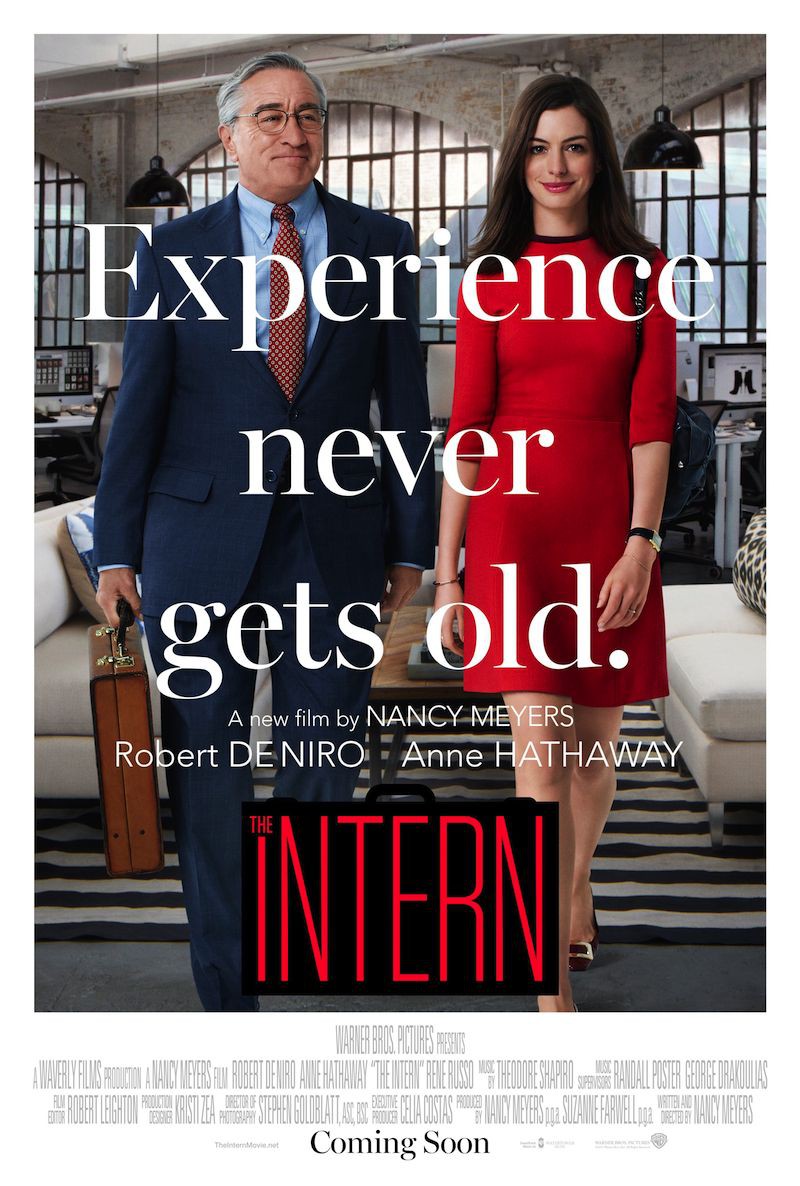
20150929060100!The_Intern_PosterI have been spending far more time than is healthy thinking about the tag- line to the new De Niro film, The Intern. “Experience never gets old”.

What on earth does it mean?

The Experience thing I get. In the film De Niro is a 70-year old returning to work as an intern – no doubt with hilarious consequences. (I haven’t seen the film, I have no idea.) He has lots of experience. You could replace the E-word with Wisdom maybe, or Maturity – although the idea that Maturity never gets old sounds even weirder.

It’s the old bit I don’t get. What does it mean? Experience is never out of date – demonstrably wrong: my experience of using fax machines in the 1990s is pretty old hat these days. Experience never goes stale – ditto.  Experience never ages – still meaningless.  I have a feeling that the subtext here is: it’s OK to be old and still go to work – look old people have things to offer too! I have changed my mind three times in the last ten minutes trying to decide whether – if that is the message – it’s a patronising or a positive one. But it only works if  the very notion of being old is undesirable – as if what they were really trying to say was Experience never has a senior moment and forgets where it put the scissors but they knew that just didn’t sound right.

“It’s only the poster for a Hollywood film” I hear you cry. “Lighten up.”

But a) in Hollywood terms I’m as old as the hills and extremely sensitive to implied ageism; and b) I’m a copywriter.  Words matter. Also, because I’m a copywriter, I know that every syllable of every word on that poster has been carefully thought about and focus-grouped by a crack team of writers, publicists and designers – none of this stuff happens by accident, or because that was just the best they could come up with before the print deadline.

So, Experience never gets old means something to someone.  But what?

Picking your fights: why Jeremy Corbyn needs better PR

Whether or not Jeremy Corbyn should have sung the national anthem at yesterday’s Battle of Britain remembrance service, by keeping quiet he has handed his opponents a massive stick with which to beat him.  Today’s coverage in the papers is dominated by accusations of disloyalty – something Corbyn’s supporters on twitter have picked up somewhat self-righteously.

Well, yes, they certainly should be talking about other things:

But JC has given them the perfect opportunity not to bother with that but to make hay elsewhere.  He needs, he desperately needs, someone competent to be running his comms operation.  The slurs, the innuendo and the self-inflicted wounds will stick to him right through his leadership (which currently looks as though it will be nasty, brutish and very, very short).

There’s a difference between the soulless spin of machine politics and a principled attempt to get your message out clearly to people who need to hear it. Corbyn is now – unfairly but probably indelibly – fixed in the public’s eye as a loony lefty who hates the Queen and won’t even do his top button up to support our most iconic national heroes.   Early images stick – ask William Hague, whose leadership  never shook off the Tory-boy images of himself in a baseball cap riding the log flumes at Alton Towers; or Ed Miliband still fighting the “brother-betrayer/ back-stabber” slurs five years after his own leadership win.

JC can hold the high moral ground of unspun purity, or he can sink beneath the waves.  William Hague has written a column for today’s Telegraph about the perils Corbyn faces. It’s headed There are countless sworn assassins waiting to knife Jeremy Corbyn in the back , there certainly are.  And at the moment he’s playing right into their hands.

Internal execution – the language of recruitment

There is a language spoken by recruitment consultants that possibly only they understand.  From this morning’s  jobs bulletin from Timewise:

Salary £50K FTE and excellent benefits.

Our client is a blue chip FMCG organisation, this person will internally, develop and lead all brand marketing strategies from an in-store perspective and externally execute the category and brand strategies in-store.”

Good customer service isn’t just for customers

Earlier this week I had an email telling me I hadn’t got a role I’d been interviewed for more than three weeks ago. They did have the grace to sound shame-faced about how long they’d taken to  confirm what I’d guessed more than a fortnight ago:  no-one who wants to work with you takes weeks to say so. Anyway I’d long moved onto something else – there’s no point brooding.

No one like me, I don’t care…

Coincidentally,  last week I  heard that an application to become a Trustee of a local charity had also been rejected.  This time they asked me to suggest a time to discuss my application so I would be more successful next time.  “Great idea”, I said. “Let’s talk.  Here are dates that are good for me, does any of this work for you?”  I’m still waiting for a reply and have the  sour feeling of having been palmed off with a rejection note  I probably wasn’t expected to reply to.

I’d have put these experiences down to the universe’s surprisingly common failure to appreciate my genius and moved on, had I not read this  about trainees applying for entry-level jobs without getting responses:

any professional marketer would be appalled if their brand, a brand whose reputation they will have carefully nurtured and be dedicated to protecting, treated customers and prospects in a similar way. Yet it seems OK to treat prospective talent in such a brand-damaging way.  And if it treats potential recruits like this, just how does it treat colleagues? And does the way it treats its people align with the customer experience it is seeking to deliver? And, more fundamentally, should those charged with responsibility for the brand, usually in marketing, take more responsibility for the employee experience?

By jingo he’s onto something, although the concept of caring enough about staff to extend good customer service to them would have been dismissed as mollycoddling in many organisations I’ve worked for. But it must be right, any point at which someone comes into contact with your company is an opportunity to win an advocate – or create a critic –  and that goes for existing and potential staff just as much as customers.

Why customers’ actual experience trumps company process every time

After more than a year of wrangling with our insurance company about water damage in our kitchen we’ve finally given it up as a bad job and thrown ourselves on the mercy of the Financial Ombudsman Service.  Anyone with a gripe about a financial service provider can go to them for adjudication, although we’ve had a letter saying that they will look at our issue within the next six months, so we may not be looking at a speedy resolution.

What’s driving your business – customers or processes?

The last straw with the insurers was their response to our final letter of complaint about what had happened.  They were mystified that we didn’t feel they’d done everything possible – despite the fact that 12 months on from lodging the claim our kitchen looks like this:

Home sweet home

They went through each point of our complaint and showed us that at almost each stage their actions were absolutely in line with company expectations, and in the few areas where they had fallen short  teams would be given feedback on how to improve. Our actual experience of what it’s like to deal with them was outweighed by their confidence that the  systems they had set up had worked as intended.  There was such a total failure to see the situation from their customers’ perspective that it would have been funny – except it leaves me still hoovering brick dust off the stairs.

The customer defection capital of the West

The  focus on internal business process rather than the actual experience of real live customers must be the very definition of bad customer service.  Complaints, though difficult to hear, should be  valuable in showing where systems are failing.  They’re not personal assaults to be fended off at all costs.

Insurance companies – like any other businesses – should think about the cost of customer churn  to their bottom line. The Institute of Loss Adjusters has a piece on its website describing the UK as the customer defection capital of the West – and suggests that insurance companies in the UK are worse than their European or US counterparts for the rate at which customers decide to move on.  They should bear in mind that it costs  more to recruit a new customer than it does to retain an existing one.  Good customer service is how you hold on to customers who are otherwise willing and able to take their business elsewhere.


Recruiting babies in the war against anti-social behaviour


Babies of the Borough

I’m not entirely sure how I feel about being watched by larger-than-life sized babies as I wander down the high street at night; but painting security shutters with the faces of real babies is an intriguing idea which might offer an answer to calming down anti-social behaviour on the high street.  

Could a baby stop a riot?

The idea hit the headlines last year when shopkeepers on a street in Woolwich had their shutters painted with the faces of  local babies by a team of  graffiti artists.  The street had been hit by looters in the riots of 2011 and owners were willing to try anything which might calm down tension in the area.   The idea is based on the principle that seeing babies’ faces stimulates a caring response in the brain  – hopefully acting as an antidote to more  violent or destructive impulses.  I guess it also helps to make the area look cared-for and connect it to its local community – a small visual nudge in the right direction.  The campaign was run by comms agency, OgilvyChange, there’s  a bit more info here.

I heard about the Babies of the Borough campaign thanks to someone in the group trying to revitalise the Roman Road.  We have more than our fair share of ugly, graffiti-ed shop shutters on the Roman, and once the shops shut – especially on dark, winter evenings – it can feel pretty hostile.

Would it work on Roman Road?

There is official Tower Hamlets guidance on what security shutters in the borough should look like:

Shopfront displays that are well-lit and visible after hours deter vandalism and theft and encourage people to use the street at night. Shopping areas become more attractive and livelier, making the Borough a better place to be.

For these reasons, the Council encourages the use of open mesh type roller shutter grilles, or perforated steel that is powder coated in a colour and curved to discourage graffiti. For best results these can be
set behind the glass.

For environmental reasons I’m not wild about the idea of shops being lit-up through the night, even if it does make the street less threatening. And the idea that the shutters should be behind the glass was ridiculed at  a recent public meeting – for the very obvious reason that while they might be able to protect the inside of the shop from burglars, they won’t stop anyone heaving a brick though the glass  just for the hell of it.  So, I wonder if babies might be the answer?

5 Tips For Delivering Good Customer Service

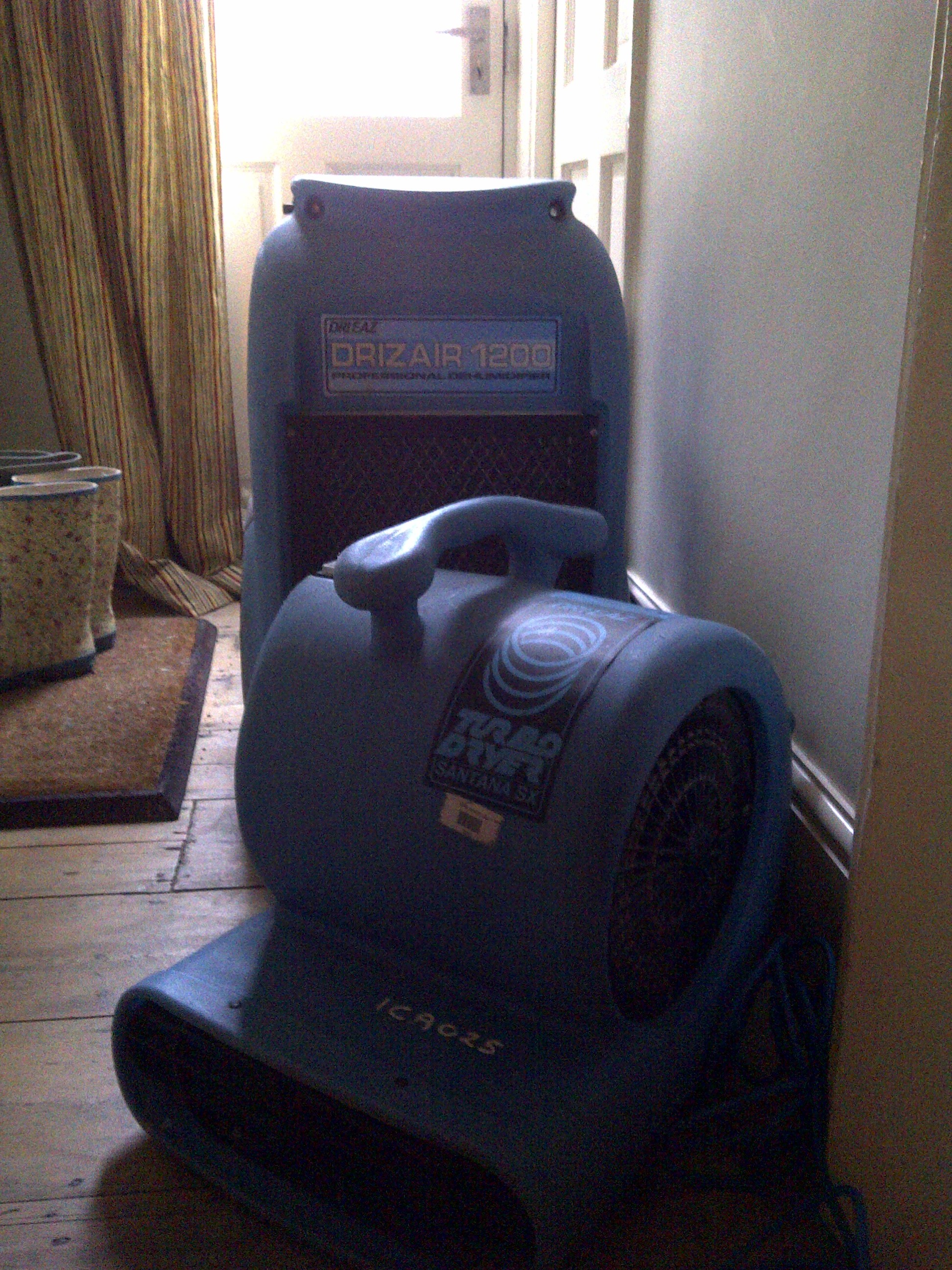
Drying out the walls

Five pieces of free advice for customer services departments, hard-won from five months dealing with my buildings insurance company…

1.  Make it easy for your customers to talk to you.  This is  the 21st century.  Embrace it.  Use email.   If you INSIST on using snail mail to conduct your business, build in some way of letting people know that  letters have arrived – you could do it via email!

2.  One person dealing with an issue helps your customers feel more secure.  Insurance claims can be complicated and take a while to sort out.  It would help your customers’ blood pressure if they had one person to deal with, rather than having to repeat the same information every time they speak to you.  Oh, and sending out letters giving the name of “your personal claims adviser” and sending a different name every time doesn’t help.  

3.  Keep your customers informed.  If they’re contacting you about a building insurance claim, something drastic has happened to their home.  That’s their biggest asset and the possession in which they have most invested emotionally as well as financially.  They want to know  you’re on their side.  They want to know what’s happening and they want to understand a process which they might never have had to deal with before.  Tell them what’s going on.  Don’t make them chase you for information.  Don’t assume they know what’s going to happen.  Put stuff in writing.  There is more information on my insurers’ website about how to buy a toy version of their  mascot than there is about what might happen if you need to make a claim.

4. Make it easy for your customers to tell you how they feel.   I mentioned the fact that I didn’t know what was going on with my claim when I was on the phone to them a couple of weeks ago – just after I’d had a phone call out of the blue from a “disaster recovery company” confirming that they would be coming to the house the next day to install their equipment.  I’ve now had an email request  to give the insurers the details of my “complaint” so that they can improve their service in future.  Which is nice.  Except the email just links to a standard multiple choice form about how satisfied I was (or was not) with the member of staff who dealt with my complaint.  It’s not the staff I’m worried about, it’s the  process that needs changing.  There is nowhere for me to tell them what I’m concerned about. It looks like a tick-box exercise, not a serious attempt to engage with a problem.

5.  Communicate  Actually all of this boils down to one piece of advice.  Communicate with your customers.   Put yourself in their shoes.  Mentally walk through the process your company asks your customers to go through when they deal with you.  What would you like to know at the beginning, middle and end of the process?  How would you want to be dealt with while it’s grinding on?  Do that.  It’s not hard.  A nodding dog should be able to do it.