On luck, good timing and why I wouldn’t want to be 28 again

Time to lie in the sun
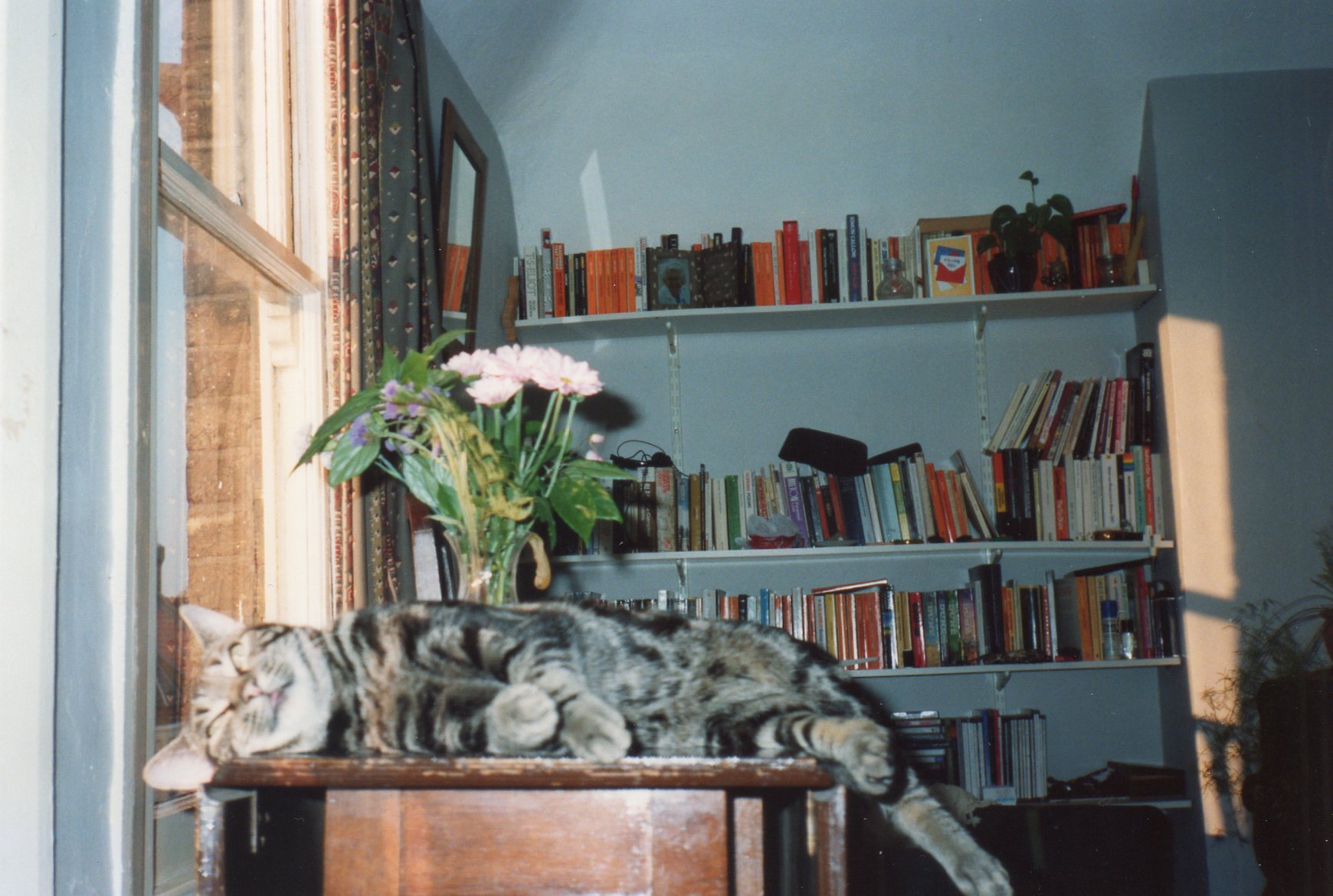
Lotus eating in SW2

I spent my 20s racketing around doing (generally) fun, creative, astonishingly poorly paid jobs, living in hovels.  The flat I rented in Brixton had no heating. In the winter,  getting dressed to get into bed often involved putting on more layers than getting dressed to go out.  It did have lots of cupboard space but none of it was usable because of the mould on the inside.  If you pulled the bedroom curtains too hard you dislodged the curtain poles, which were tied with string to nails knocked into the wall.

It was the last in a long line of shared houses and bedsits which took me  from leaving university to buying a place of my own; which I did when I found someone I wanted to settle into domesticity with.  Fortunately, this happened at the end of  the last recession – at just about the last time in the history of London when it was possible to buy a house in Zone 2  on one person’s salary (he was out of work at the time) without robbing a bank first.

They do things differently now – they have no choice.  I was in a meeting yesterday with a successful 28-year-old professional who lives at home with his mum.  He’s saving for a deposit on a flat and could probably just  afford it now, but doesn’t want a 90% mortgage,  because he wants to be sure that he will have paid his mortgage off before he’s 55.  This is alien on so many levels.  

Apart from anything else, when I was 28 it never occurred to me that one day I would be 55.  I’m not sure I was unusually feckless, maybe I was, but planning – for mortgages, middle age, retirement wasn’t something I  ever thought about.   I would have been horrified by the idea of having to go home after university and live with my parents – however much I love them, and however comfortable their home was. There were places to rent when I needed them and if I ever thought about the future at all, I had a vague expectation that when I was grown up enough to want to buy a house, I’d have scrambled far enough up the jobs ladder to be able to afford it.  

My timing in life has always been impeccable (I claim no credit for this).  Among the first generation in my family to be able to go to university, I had a grant and supportive parents and came out with an overdraft which seemed monstrous at the time, but was laughably small compared to a student loan of £9k pa.  I left university at a point when there were jobs for graduates to do and affordable (if scuzzy)  places to rent and be independently foolish in ‘til something better came along.  

There’s a thought-provoking piece in today’s Guardian about demographic change and what it means for universities which includes this:

Commenting on patterns of immigration in the US, Jack Donaghy, in the TV comedy 30 Rock, puts it this way: “The first generation works their fingers to the bone. Second generation goes to college and innovates new ideas. The third generation goes snowboarding and takes improv classes.”

I feel like I’m part of Donaghy’s third generation.  My colleague – and my children, although they’re a lot younger than him – aren’t so lucky.  They’re so much more grown-up than we were at their age.  So aware that life is hard, so much more constrained.  Thank God I’m not 28 any more.  
Rescuing the Roman Road

Mary Portas comes to the Roman Road

I’m not generally a fan of reality television.  What you usually get is a condensed version of events, following a story arc which goes something like:  stage 1. Presenter meets people with a problem.  2. Conflict, personality clashes, things start going badly (ad break) 3. Recap – presenter worries that he/she can’t turn things round this time 4. Presenter comes up with plan to turn things round – will it work?  (ad break) 5. Plan works.  6. Final triumph, admissions all round that it was worth the heartache along the way.  7. End credits

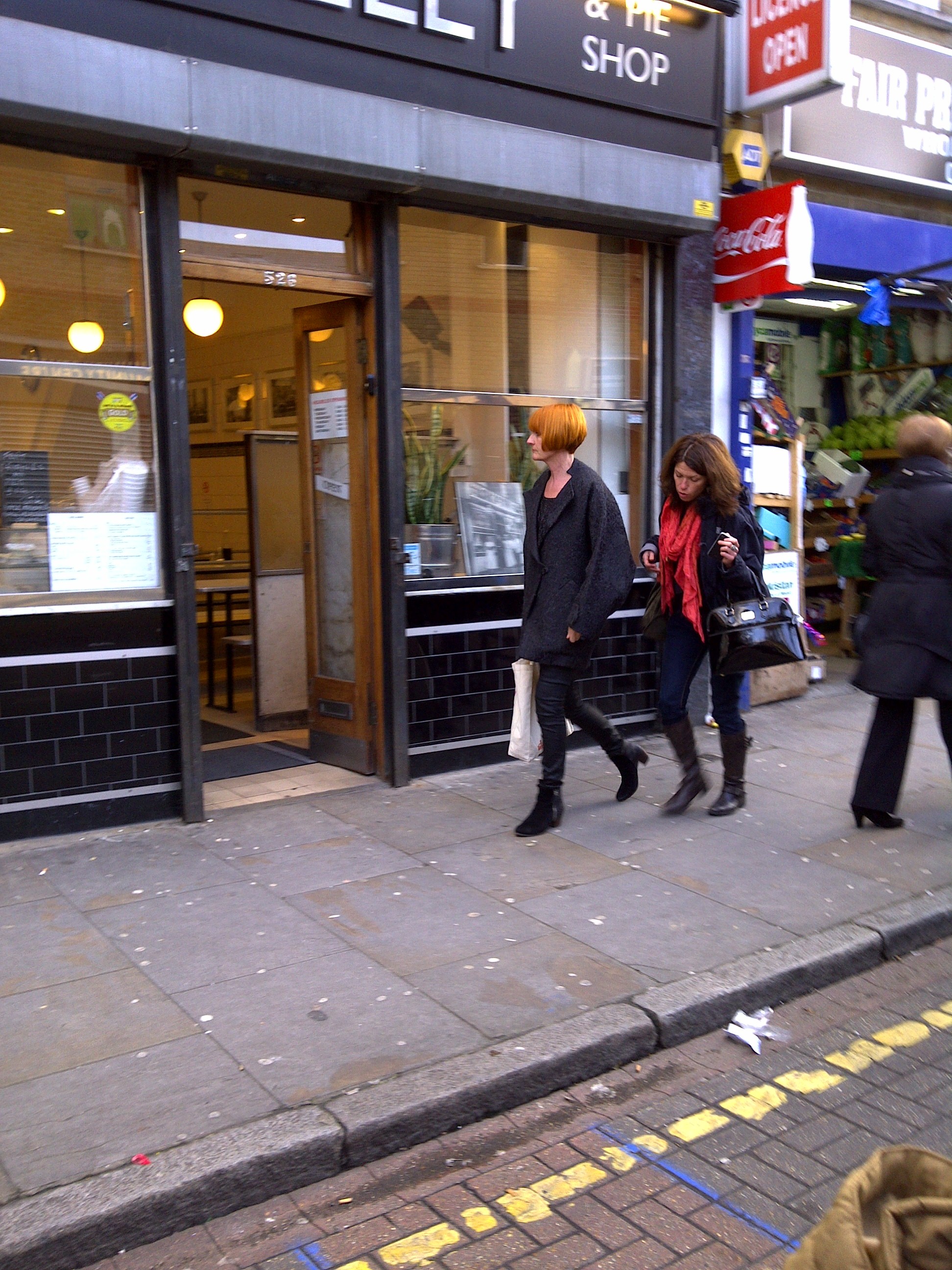
But even knowing all that.  Even with my most cynical head on, I can’t help hoping really hard that the magical Mary Portas effect will somehow be able to  help the Roman Road.

One upon a time on the Roman Road…

Welcome to the Roman Road
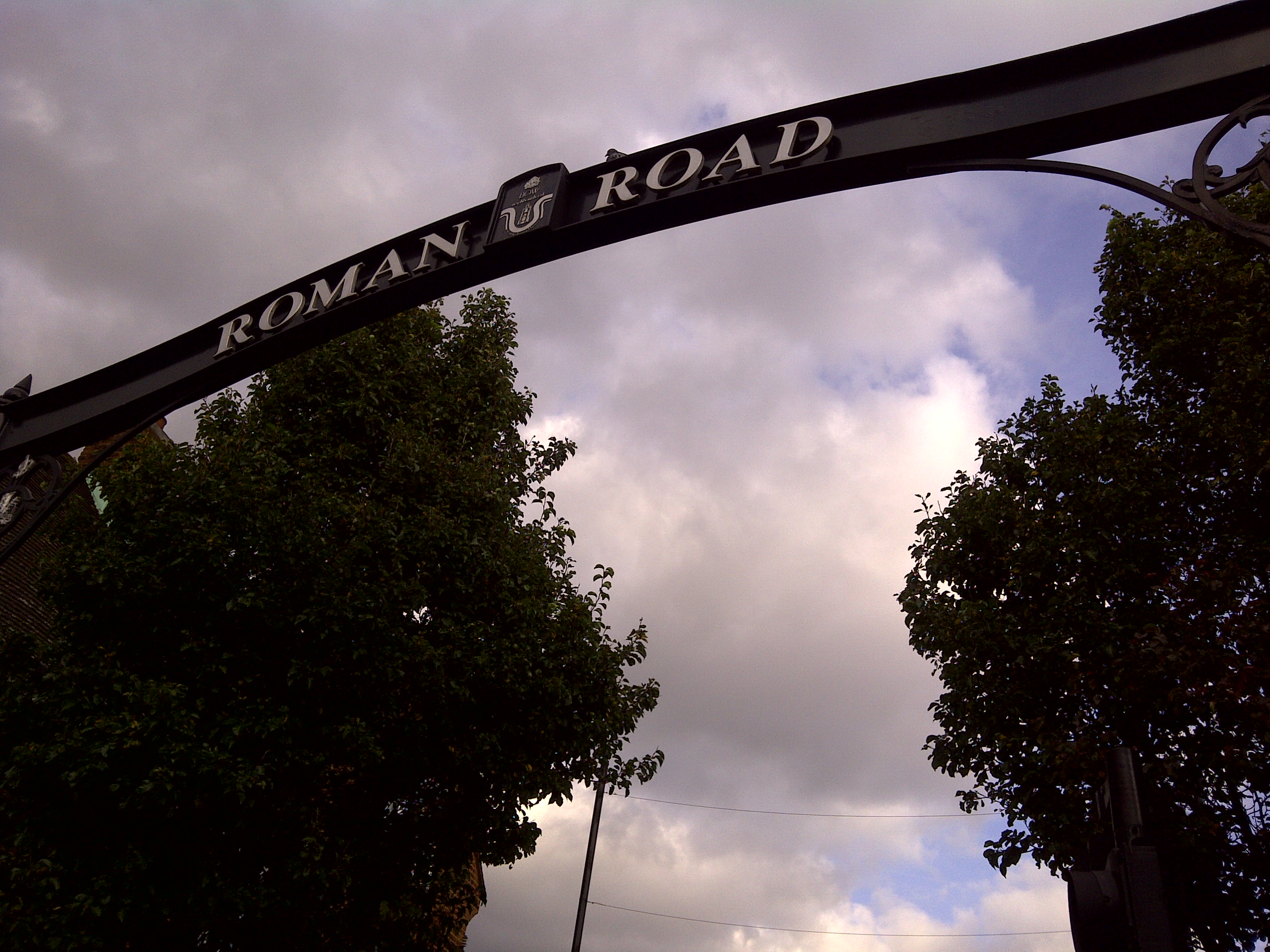
The entrance to the Roman Road

The Roman Road, used to be one of the attractions of  living in this part of the east end.  You could do your everyday shopping in the supermarket then mooch up and down the Road and along the market where you could get everything from children’s toys to vinyl records, a wrought iron table to a photograph album,  a packet of pins to a table lamp.  There were 38 fruit and veg stalls on the Roman Road market twenty years ago – I know this because Paul, who owns one of the last two still there told me so this afternoon, when he announced that he’s packing up and leaving the market at Christmas.

Most people think that the market started to decline when the supermarket shut down and people had to go elsewhere to buy the basics.  Now what you can mainly get on the Roman Road is cheap stuff and expensive credit.  Half a dozen pawnbrokers have opened up, there are several pound shops, some payday loan companies and a couple of betting shops.  There are some signs of life even now and some great new shops bucking the trend, but generally it’s a sad shadow of what it used to be.  Enter Mary P…

A ray of hope?

A small team of volunteers (which I’ve recently joined) put in a bid to be one of the so-called Portas Pilots – a scheme to revitalise the nation’s declining high streets.  They didn’t get the money, but they have won a smaller sum as one of DCLG’s Town Teams.  There are modest plans for events to promote the market and the shops in the Road in the run up to Christmas and, hopefully, that will build some momentum and things will keep going next year.  Meanwhile, Mary Portas seems to have taken an interest in the Roman and has been spotted several times, filming for a project she’s working on  for next year.

Let’s hope it works.  There are lots of examples of how markets can support their local neighbourhoods – Broadway Market is one local example, Brixton Market seems to be going from strength to strength, Columbia Road is on  the mainstream tourist trail these days.  But they need to be cherished or they fall into disrepair – I hope we’re not too late.

London 2012 – the tyranny of choice

Olympic Park in simpler times

When I was a student and used to go to the Edinburgh Festival every summer, there was generally a point halfway through when I knew, with absolute certainty, that everyone else in the city had tickets to much better shows than I did – the ones that would win awards but were now sold out.  They were going to cooler parties than I’d been invited to, were having the unforgettable “Edinburgh experience” I craved, while somehow I was trailing behind, too late to join in.I thought I’d grown up and out of that particular anxiety, but I’m starting to get the same feeling about being in London this summer.  Partly this is due to the fact that there’s so damn much going on – most of it within walking distance of my front door.  How can anyone do it all?  How can you even know what’s out there so you can choose the best bits?

But also (I’m rationalising this to myself to find an excuse for being so immature) it’s because every experience I could be having this summer is instantly available to me on my phone.

Via Twitter and Facebook I can see pictures of all the events, hear the music, watch the video and share the reactions of all the people who are out there doing the stuff that I’m not.

This is not making me feel as though I am sharing the experience.  It’s not multiplying the pleasure.  It’s just making me feel uneasy about what I’m missing.  The duty to have an “extraordinary day”, to make the most of this “once in  a lifetime opportunity” – and make sure my children have an unforgettable summer too –  is becoming another chore to fit in along with de-fleaing the cats.

There is a recognised body of academic research into the paradox that having more choice  tends to make people more dissatisfied with their lot.  And there’s a growing number of studies about social media anxiety (this one by Anxiety UK) – though they’re usually focused on the anxiety people feel when cut off from social media, rather than as a result of using it.

For the record I don’t think I have an anxiety disorder, I think I’m just a ludicrously over-competitive person who really needs to calm down a bit.  But as an experiment I’m going to give up on Twitter and Facebook for the duration of the Olympics (or maybe we’ll see how it goes after the opening weekend…)  I managed to resist temptation during last night’s magnificent opening ceremony with nary a twinge. Let’s see if it makes me a more contented Londoner.

Workplace bullying … make the bully pay

As well as lightly grilling Piers Morgan yesterday, the Leveson Inquiry heard  evidence about newspaper culture from Steve Turner, an NUJ rep on Fleet Street with some depressing things to say.

10.49am: Turner says management back bullies up.

It’s almost distressing to see members expect to get justice through this process – and it never happens… one level of management backs up the next…

Bullying is still going on in newspapers, says Turner.

In one company fairly recently, one of our members went to management to complain of bullying and they said to him immediately ‘you’d better leave’… the bully is still there, nothing’s been done about it.

Looking back, I realise I’ve worked for some corking bullies in my time though, being young and inexperienced,  I just assumed that this was how people behaved in the world of work. 

Dodging the flowerpots…

The first,  the flowerpot-throwing, spittle-flecked yeller at the theatre where I started out, was excused his tantrums on account of his genius. He believed that we  backstage toilers should be grateful to be flayed daily in the service of Art.  I  learnt a lot from him about taking my job seriously.  On the other hand he did leave me with mental scars which can make the interview question “tell us about a handling a difficult situation at work” liable to bring on a dose of post-traumatic twitching.

… and the bollocking chair

I arrived at the BBC at the tail end of the old-school management era.  The guys I worked for had come up through the ranks and been bullied themselves.  Now they had the chance, they were happy to pass it on.   Grown men would fight to avoid the “bollocking chair” in the morning meeting – the one  which put you in the Controller’s eye line when he looked up from the papers and needed  to vent some wrath. 

Then, eventually, to Whitehall, where things were quieter, though the sense of having stumbled into a world where everyone else knew the rules but didn’t care to explain them, often felt worse than simply being yelled at during assembly.

Again,  I arrived at the  end of the period where staff joined young and toiled up through the ranks, learning  how to be “one of us” along the way.  The worst bullying I saw  happened to  a colleague who eventually took early retirement, blaming  stress-related health problems, with compensation – and a confidentiality agreement – negotiated by her union.

In all these cases the victims moved on and the bullies stayed put or were moved sideways to relieve senior management of the task of doing anything about them.  I doubt they changed their ways

A business’s culture starts at the top.

These are not healthy ways to work.  They do not deliver organisational excellence.  They leave people anxious and unhappy.  I met a friend for coffee the other day and we swapped war stories about places we have worked.  Coincidentally we’ve both done time at Channel 4, the BBC and government, and agreed that C4 was best.   When we were there, there were at least two senior women in the management team who supported junior members of staff up the career ladder rather than keeping them in their place. Bullying would just not have been tolerated.  And quite right too.  The scars last a long time, and no-one is helped by the belief that it’s too hard to do anything about it. Which seems to have been the approach in Fleet Street for years –

The reporter concerned had been bullied over a long period of time and was ringing Turner twice a week to get advice.

Because I have seen so many of these things end in tears and possible job loss, [Turner’s ] approach was to counsel the reporter through the difficult time in the hope that the executive would move on to someone else.

The wishy washy liberal’s guide to the sexual politics of clothes

Brave New World (1931), shows there’s nothing new in panics about the sexualisation of the young.  Huxley had a vision of a government kept in power because  people were so sated with drugs, sex and sport that they hadn’t the energy to care how they were being governed.  I wonder if Reg Bailey’s a fan?

Is banning kids’ clothes just protecting parents?

I sympathise with the Mothers’ Union report fronted by Bailey, criticising the sexualisation of children through the sale of inappropriate clothing and remorselessly sexual  advertising.  But I have a sneaking feeling that I oppose these things because they make me uncomfortable rather than because of the effect they have on children (which is in any case unproven).

I remember an anxious wait on a packed bus in a traffic jam praying that my  son, aged 6 or 7,  wouldn’t notice the billboard we were waiting next to and ask what Want to get it up and keep it up all night? meant.   I’m sure the ad man who draped a naked Sophie Dahl over a velvet couch to advertise perfume  never had to explain to a child on the tube why she didn’t have any clothes on.

I’ve come to accept, though, that me not liking things –  baseball caps, black tights with white shoes, reality TV – isn’t, sadly, enough for them to be banned.   Not everyone looking at adverts is a child (or a parent).  The world can’t be shaped just to protect the  young.  I’d like popular culture not to be so boringly obsessed with sex, but no-one’s forcing me to watch.  My children, raised amidst the sexualised culture, seem pretty well adjusted.  Padded bras for 8-year olds are weird, but if no-one bought them they’d stop making them.  Parents should take responsibility for their children and protect them from this stuff if they’re worried about it.  Manufacturers and advertisers are just  following the money.

Sluts and Bunnies

So while I’m uncomfortable but not outraged by 8-year olds in bikinis – wish they didn’t exist, don’t want to ban them – I’m more torn about the sexual politics of clothing as the 8-year olds grow up.  That’s the problem with being trained to see both sides of an argument,  you can see both sides of the argument.

Things I am both for and against…

  • I support the principle behind the Slut Walk –  a woman has an absolute right to wear what the hell she wants  when she’s out on the streets.
  • I would rather  my daughter covered up when she went out, because I know that  she’ll attract less unwanted attention that way.
  • I back the eff off Hef campaign to stop the opening of a new Playboy Club, believing that bunny costumes insult and degrade women.
  • I back the rights of women to earn a living however they want.
  • I’d rather young people put off having sex until they are emotionally as well as physically able to cope with it.
  • I’m definitely not in favour of the Nadine Dorries school of abstinence (for girls).  In this subject more than any other openness is important, ignorance is not bliss.  It can be dangerous.Oh, and
  • Openness about sexual issues includes the right of men to have information about erectile dysfunction.
  • I really don’t want to see the ads.

I got a text from my daughter as I was writing this.  There is going to be a slut walk on sat can i go?  I said yes.  And restrained the impulse to add but let’s talk about what you’re going to wear.

Clerihew – for Richard, with a resigned air

When April showers come your way/ They bring the flowers that bloom in May.

If May’s rain all falls in June/It brings a leak in your bathroom.

Lipsmackingthirstquenchingacetasting…

Talking about the dark ages of communications – I had a weird flashback moment to them this morning when I saw a piece about royal weddings in the paper,  illustrated with a picture from a Charles and Di street party in 1981.

There in the background was a Richard Shop – (a late and unlamented high street fashion chain, for younger readers.)

I could INSTANTLY remember all the words to the Richard Shop TV campaign – if you’re my age I bet you can too (google Richard Shops, there are pages and pages of sites devoted to it).  All together now:

Richard Shops are filled with all the pretty things/ soft and lovely pretty things to wear/  Hey there pretty face/ Make the world a prettier place/ Come pretty face/ Come buy your clothes at Richard Shops 

Thank God I was alone in the kitchen.  It led to a medley of classic 1970s/’80s advertising jingles which would have amazed and astounded my children, had they been there.

So, 2 questions:

  • Where the hell is this stuff stored?  Why can my memory  file and recall it so effectively, without being asked to, when so much else – the date of my next VAT return, for example – seems so much more elusive; and
  • Why don’t advertisers use songs like this in advertising any more?  They evidently imprint brand names on customers’ memories for decades.

I genuinely cannot remember a single recent ad for either Pepsi or Coke, but You Tubing the I’d Like To Buy The World A Coke song bought a nostalgic tear to my eye and, through the lump in my throat,  I could sing along with every word (and I really hate Coke) .

5 ways to become (slightly) happier

I immediately warmed to the title of Oliver Burkeman’s event at the RSAHow to Become Slightly Happier.  There’s something pleasingly modest, reassuringly self-deprecating, politely English about it.  It won’t transform your life, it won’t make you rich, it might just, perhaps, help you deal with grey Monday mornings.  I like his sense of scale.

Having studied a mountain of self-help books, he has come up with some top tips for things which seem to work.  Thankfully they run counter to the mass of advice to transform your life through positive thinking which frankly just sounds exhausting (this in-built sloth might explain why my favourite tip is number 4)

  1. Leave your thoughts alone.  Don’t work  hard on trying to think positively, don’t be yanked off course by negative emotions but don’t try to squelch them either.
  2. Write your problems down – don’t try to solve them, just externalise them.
  3. Cultivate randomness and new experiences rather than trying to control your environment.
  4. Have really tiny goals; goals so laughably small that they can pass under the radar of the bit of the brain that predicts failure. Apparently Burkeman carries an egg timer around with him so that he can time  his goal to do two minutes of work at a time on difficult projects;  he knows people who have  got fit by starting with a brisk walk for 30-seconds every day.
  5. If bothered by perfectionism go into work one day and try just to be mediocre.  Try to function at about 60% and see what happens when the constant pressure to make everything perfect has gone.

There are of course related issues to think about here – do we really need other people to tell us how to be happy? Does paying for the advice make it more credible – or more likely to work? What is it about our society that seems to make so many people unhappy?  Is being unhappy (in small doses) a bad thing?   If there was no unhappiness would there be  progress? ( a question from the RSA audience, which prompted me to think – if there is no unhappiness does it matter that there’s no progress?)  But I’ve been writing this for more than 2 minutes already, and today is my day for being mediocre, so I’ll leave other people to wrestle with those.  I’m just going to re-set the timer and do at least, two averagely OK minutes on my new business plan.

Password rage

  • 13 passwords for different computer/phone-type accounts (Blackberry,Twitter, WordPress, Skype  etc).
  • 20 passwords for accounts with professional associations, companies I do business with etc.  Inexplicably this list includes 2 usernames for different bits of the Business Link site, each with its own password, oh, and a 12-digit government gateway ID.
  • 9 house-related accounts – utilities companies, banks, insurance company etc, and
  • 5 other accounts – which aren’t even mine,  I just keep track of them for the children

The pain of setting them all up has faded with time, but I know some of them have separate usernames attached, some of them don’t, all of them have passwords –  memorable, unguessable, mixing upper and lower case letters, numbers and symbols to a dizzyingly complex degree.

And when they work it’s fine.

And when they don’t and you spend, as I just have, 15 sodding minutes going round and round the cycle of failing to log in, resetting the password,  re-entering the new password and the screen continuing to do that bloody annoying little sideways judder that’s probably supposed to be cute, but that  tells you that you’re going nowhere,  how in the name of all that is holy do you prevent yourself from smashing a shoe through the screen?

Fran Lebowitz – a fan girl writes

As soon as I knew who she was, I wanted to be like Dorothy Parker.   I was immoderately impressed that, when she was challenged to make up a joke using the word horticulture,  she instantly quipped:  “you can lead a horticulture, but you can’t make her think”.  I was about 12.

When I hit my early 20s I wanted to be Fran Lebowitz instead.  Having watched Public Speaking last night, I think I still do.  The poise.  The wit.  The 1970s New York taxi sprayed “such a subtle shade of pearl grey that straight men think it’s white”.  The fabulous self-possession  (“Who do you go to when you need a second opinion?”  “Why would I need a second opinion?”).  The pride in being  smart and funny and caring about art.  

She is shamelessly, gloriously elitist.  We lesser mortals should leave the business of writing to the truly talented.  “Too many people are writing books.  Period.  And the books are terrible.  And this is because they have been taught to have self-esteem.  And apparently they have so much self-esteem that they think ‘you know what?  I shouldn’t keep these thoughts to myself.  I should share them with the world!’…Well, no your book is not as good as anyone else’s.  Your life story would not make a good book.  Don’t even try it.” 

She doesn’t care what we think about current affairs, either.  “You know on the news, when they put up the Twitter number – whatever it is, I don’t really understand – and say ‘we really want to know what you think?’  I think: ‘Do you?  I really don’t'”.  

I became a fan without reading her books – they were hard to come by in Midlands’ bookshops in the early 1980s so I had to make do with newspaper articles and the occasional profile. It seems as though they are still a minority interest – there are three second-hand copies of Social Studies listed on Amazon, prices from £116.  Metropolitan Life retails at a slightly more affordable £29 but second-hand copies again, so I assume she’s out of print here. I ordered the collected essays to read straight away, but will resume my second-hand bookshop-scouring until I find the originals. 

Watch the film, you won’t be disappointed.  Who wouldn’t warm to a woman who can say:  “Whether people seek my advice or not, it’s really pleasurable knowing everything.  I’m sure that people think ‘she doesn’t know everything’.  They’re wrong”.