Rescuing the Roman Road

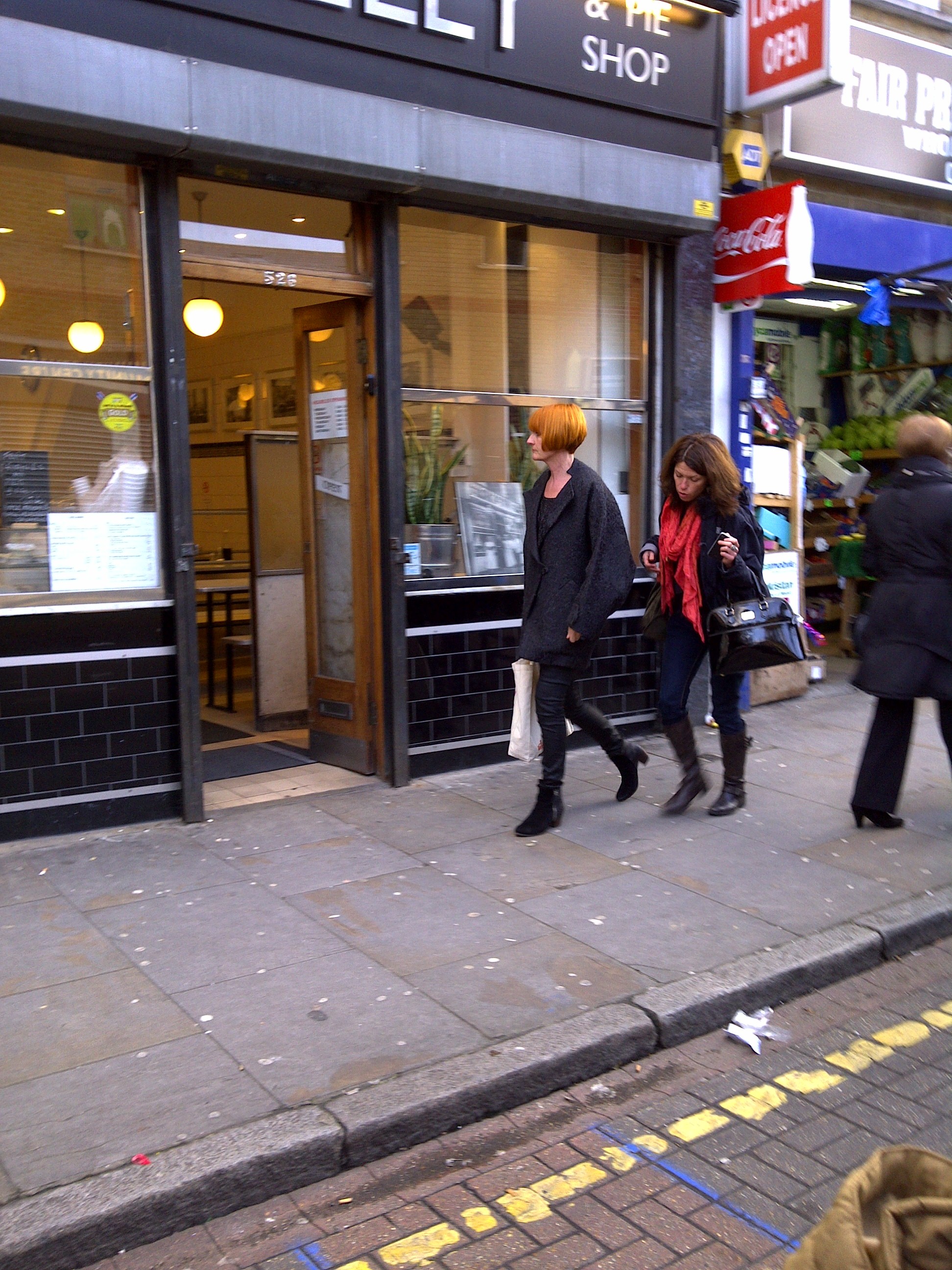
Mary Portas comes to the Roman Road

I’m not generally a fan of reality television.  What you usually get is a condensed version of events, following a story arc which goes something like:  stage 1. Presenter meets people with a problem.  2. Conflict, personality clashes, things start going badly (ad break) 3. Recap – presenter worries that he/she can’t turn things round this time 4. Presenter comes up with plan to turn things round – will it work?  (ad break) 5. Plan works.  6. Final triumph, admissions all round that it was worth the heartache along the way.  7. End credits

But even knowing all that.  Even with my most cynical head on, I can’t help hoping really hard that the magical Mary Portas effect will somehow be able to  help the Roman Road.

One upon a time on the Roman Road…
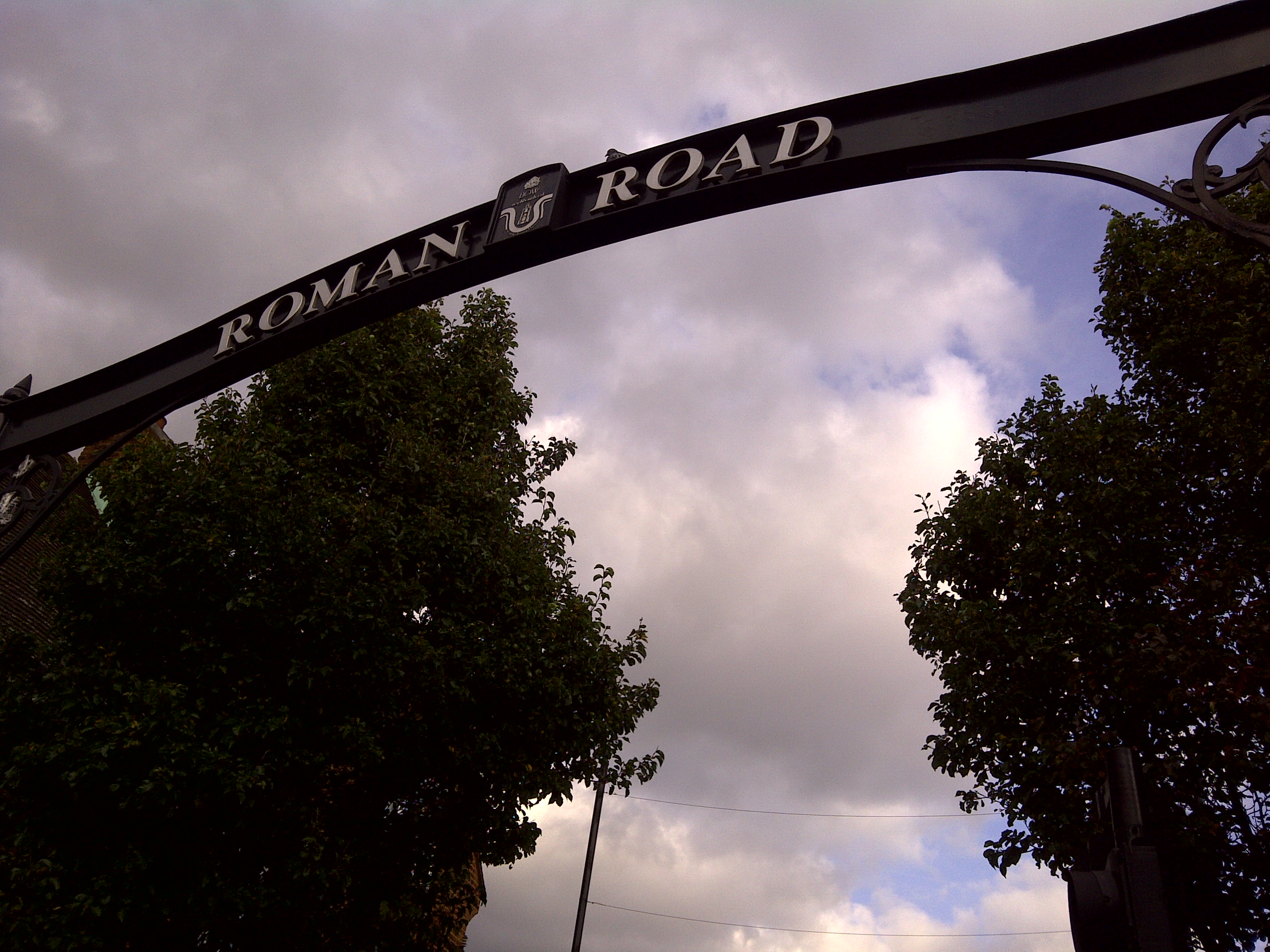
Welcome to the Roman Road
The entrance to the Roman Road

The Roman Road, used to be one of the attractions of  living in this part of the east end.  You could do your everyday shopping in the supermarket then mooch up and down the Road and along the market where you could get everything from children’s toys to vinyl records, a wrought iron table to a photograph album,  a packet of pins to a table lamp.  There were 38 fruit and veg stalls on the Roman Road market twenty years ago – I know this because Paul, who owns one of the last two still there told me so this afternoon, when he announced that he’s packing up and leaving the market at Christmas.

Most people think that the market started to decline when the supermarket shut down and people had to go elsewhere to buy the basics.  Now what you can mainly get on the Roman Road is cheap stuff and expensive credit.  Half a dozen pawnbrokers have opened up, there are several pound shops, some payday loan companies and a couple of betting shops.  There are some signs of life even now and some great new shops bucking the trend, but generally it’s a sad shadow of what it used to be.  Enter Mary P…

A ray of hope?

A small team of volunteers (which I’ve recently joined) put in a bid to be one of the so-called Portas Pilots – a scheme to revitalise the nation’s declining high streets.  They didn’t get the money, but they have won a smaller sum as one of DCLG’s Town Teams.  There are modest plans for events to promote the market and the shops in the Road in the run up to Christmas and, hopefully, that will build some momentum and things will keep going next year.  Meanwhile, Mary Portas seems to have taken an interest in the Roman and has been spotted several times, filming for a project she’s working on  for next year.

Let’s hope it works.  There are lots of examples of how markets can support their local neighbourhoods – Broadway Market is one local example, Brixton Market seems to be going from strength to strength, Columbia Road is on  the mainstream tourist trail these days.  But they need to be cherished or they fall into disrepair – I hope we’re not too late.

Listening to women for a change

To set our scene.  It is yesterday morning.  The Today programme is on.  There’s a debate about Mehdi Hasan’s article about the political left’s position on abortion.  I disagree vehemently with everything he says*, but the thing that makes me curse out loud into the washing up is the opening exchange:

Suzanne Moore: I find myself, yet again, discussing abortion with two men on a programme which is famously bad at representing women, but…

John Humphrys (outraged, interrupting): Sarah was on yesterday! She happens not to be on this morning! But anyway, go on..

And (I hope) a nation of women yelled in harmony – “Because we’re  obviously only allowed one!”

There is, famously, only one female presenter on the BBC’s flagship radio news programme.  On days when she isn’t on you can go from the 7 o’clock news via the sports report at 7.30 to Thought for the Day at quarter to 8 and hear almost no female voices.

Monday’s Women in Journalism report on the representation of women in the media graphically demonstrated that the male-dominance of Today is not unusual – 78% of bylines on front page stories are for men, 22% for women; 76% of experts quoted in stories are men, 24% are women (almost an exact inversion of the statistics for victims, of whom 79% quoted are women, 21% men).

I went to a Fawcett Society debate at the weekend about the lack of women’s voices in the media, the City and politics. It wasn’t much of a debate, frankly. I guess it’s hard to have a thrilling exchange of views on a subject where everyone is in heated agreement. It’s ludicrous that only 4% of CEOs of FTSE 100 companies are women; that there are more millionaires in the cabinet than women; that there is only one woman editor of a national daily newspaper. And I for one am sick of it and of the glacial rate of change.   So, I was cheered to see that the BBC is trying, in a very small way, to do something about increasing the range of voices it listens to.

BBC Academy Female Experts Training Day

findaTVexpert is working with the BBC Academy on a media training day for female experts in Science, History, Politics, Business & Engineering. It’s a fantastic opportunity for female experts who want to put themselves forwards for TV & Media opportunities. Read the below, sign up now – and help spread the word on twitter, Facebook, etc.
Here’s a link.  If you have any expertise in an area the media should be covering please sign up and get on out there.   The Today programme needs to hear from you.
* For anyone interested in why I’m on the other side of the abortion debate from Mehdi Hasan, I refer you here – it pretty much says it all.

Falling out of love with The Thick of It

I worked for lots of women in my time in Whitehall.

The thing that all of them – Harriet Harman, Margaret Hodge, Barbara Follett, Ruth Kelly – had in common with the men I worked for, was their absolute, unshakeable faith that they had what it took to run the country. They may or may not have been right. Politicians have as many personal imperfections as everyone else on the planet. What’s funny about politics is this mismatch of  total self-belief with the reality of what they achieve. As Armando Iannucci said last week “although it’s a big job it’s actually little people“.

But politics is hard. Getting anywhere near to the top demands huge self-confidence. There are no shrinking violets in the Cabinet or Shadow Cabinet.  Which is why the sight of Nicola Murray agonising about walking in a straight line while holding a poppy wreath on last night’s Thick of It made my teeth curl.

I appreciate that a former civil servant complaining about a political satire is like a hotelier arguing that Fawlty Towers didn’t capture the reality of working in the hospitality industry. Being true to life isn’t really the point. I also get that the best comedy comes from putting people into situations they are totally unfitted for – Basil Fawlty again. (And that sequence did give rise to a classic Thick of It-ism “She’s officially a Cenotwat” for which I  forgive them a bit)

But none of the women I ever worked for would have had a problem with walking and poppy-wielding at the same time.  Nor would they need to be told by their male comms advisor (even if he was the incomparable Malcolm Tucker) that they needed to toughen up their act. Nicola Murray shone like a schoolgirl who’d just been noticed by the coolest guy at the disco. Harriet Harman would have eaten him for breakfast then spat out the bits.

I accept there’s a limit to how many rampant megalomaniacs you can have in one TV programme – especially as this series of  TTOI is trying to reflect a coalition government as well as the opposition, so that’s three sets of dunderheads who need to be differentiated somehow.   I just wish it wasn’t the woman who’s the simpering nitwit while the blokes get on with their plotting.

And, finally: I do appreciate how bloody annoying it must be for every woman in a TV programme or film to be expected to represent one half of humanity everytime she opens her mouth on screen. But the rarity of showing women in positions of power makes them symbolise something bigger than themselves, like it or not – even in (especially in?) a comedy.

I really hope the worm turns in the rest of this series.  Not least because Rebecca Front has been one of my favourite comedy performers since we were at university together.  I thought, aged 18, that she was the funniest person I’d ever met.  I’ve followed her career with a proprietorial pride ever since, even though we lost touch years ago.  I still think she’s a genius.  I just think she deserves better.

London 2012 – the tyranny of choice

Olympic Park in simpler times

When I was a student and used to go to the Edinburgh Festival every summer, there was generally a point halfway through when I knew, with absolute certainty, that everyone else in the city had tickets to much better shows than I did – the ones that would win awards but were now sold out.  They were going to cooler parties than I’d been invited to, were having the unforgettable “Edinburgh experience” I craved, while somehow I was trailing behind, too late to join in.I thought I’d grown up and out of that particular anxiety, but I’m starting to get the same feeling about being in London this summer.  Partly this is due to the fact that there’s so damn much going on – most of it within walking distance of my front door.  How can anyone do it all?  How can you even know what’s out there so you can choose the best bits?

But also (I’m rationalising this to myself to find an excuse for being so immature) it’s because every experience I could be having this summer is instantly available to me on my phone.

Via Twitter and Facebook I can see pictures of all the events, hear the music, watch the video and share the reactions of all the people who are out there doing the stuff that I’m not.

This is not making me feel as though I am sharing the experience.  It’s not multiplying the pleasure.  It’s just making me feel uneasy about what I’m missing.  The duty to have an “extraordinary day”, to make the most of this “once in  a lifetime opportunity” – and make sure my children have an unforgettable summer too –  is becoming another chore to fit in along with de-fleaing the cats.

There is a recognised body of academic research into the paradox that having more choice  tends to make people more dissatisfied with their lot.  And there’s a growing number of studies about social media anxiety (this one by Anxiety UK) – though they’re usually focused on the anxiety people feel when cut off from social media, rather than as a result of using it.

For the record I don’t think I have an anxiety disorder, I think I’m just a ludicrously over-competitive person who really needs to calm down a bit.  But as an experiment I’m going to give up on Twitter and Facebook for the duration of the Olympics (or maybe we’ll see how it goes after the opening weekend…)  I managed to resist temptation during last night’s magnificent opening ceremony with nary a twinge. Let’s see if it makes me a more contented Londoner.

Are social networks the best tools for charity PR?

Here’s some fantastic advice for charities (though any small business could use it) about delivering successful PR on a budget.  As you  might expect it focuses solidly on digital channels – Twitter, Facebook, blogging and audioboo.

The low entry costs compared to the potential impact of social media make them obvious channels for organisations without marketing budgets or press officers to command.   An effective social strategy costs in terms of time – those blog posts don’t write themselves, and the price of success on Twitter is eternal vigilance.  But as the example of the Never Seconds blog shows, a simple piece of online communication can  have extraordinary repercussions.

However, nothing is ever simple.  Recent experience suggest it’s worth treading carefully before the evangelising can commence.

Lesson 1: don’t assume that people know what this stuff is or how it works

I did some training recently with a charity whose Chief Exec wanted her staff to understand the role that they could all play in raising profile through the smart use of tools like Twitter.  Explaining the potential of Twitter took second place to explaining what it is and how it works.  A minority of people in the room had accounts and used them enthusiastically.  Most displayed a degree of scepticism.

Lesson 2: don’t assume that people have enough time, technical confidence – or kit.

Most people didn’t feel comfortable about communicating online or able to do it, partly because they lacked equipment – many didn’t have smartphones, for example (today’s figures from Ofcom suggest that only 39% of people do). There was concern about losing time from already busy days to servicing more communication, and about how a small organisation could meet the increased workload that a successful strategy might generate.

Lesson 3: just because you can see opportunities don’t assume others share the view.

My group assumed that Twitter would be time-consuming (“don’t you just get streams of stuff to read and respond to?”); full of trivia (“isn’t it all about what people had for breakfast?”); and slightly creepy (“following people and having them follow you?  It sounds like stalking!”).

Lesson 4: charities may have particular concerns about social channels that PRs should respect

Many felt uneasy about talking about what they do online because they work with vulnerable people in difficult circumstances.  There was a lively discussion about the danger of forfeiting clients’ trust, the limits of what was and was not acceptable and how to raise attention – and funds – without exploiting people.

Eventually we agreed that it was better to make a cautious start with social media than avoid it for fear things might go wrong; that there are plenty of voluntary sector organisations using social media effectively and their experience offers lessons to be learned; that while client confidentiality trumps all other considerations, there is much else that can be discussed online.

But there’s still convincing to be done before some organisations feel confident enough to look for advice on what to put in their multi-media toolkit.

Too small to invest in the future?

I ran a training day this week for a small charity which is, warily, thinking about dipping its toes into PR and marketing for the first time.

It quickly became clear that even the simple ideas we were coming up with were beyond their limited resources and the event became an impromptu staff meeting as they looked at ways of restructuring teams to free some time to allow people to do more communications.

Now, this is all very gratifying for me – they  liked what I was suggesting and could see the value it offered.  But it raised some uncomfortable issues, too.

Where do resources go – future investment or current staff?

Like many charities they run largely on volunteer and part-time labour.  To get additional things done they’re going to have to take work away from some staff and give it to other, already over-loaded colleagues.  Or they’re going to have to stop doing some things completely.  Or they’re going to have to find a partner organisation with  resources they can share.  Or they’re going to bring in a new member of staff from outside to do the work.  To get someone who’s worth having they’re going to have to pay – not big bucks, but something.  How does the CEO explain to volunteers, some of whom have stuck loyally to their task for years, that there’s no money to pay them, but there is enough to hire someone else?

The answer is that without investment in communications the organisation’s membership won’t grow, its income will stay fixed and  there’ll never be  enough money.  But that’s easy for me to say. I’m not the one doing a full day’s work just for the love of it.

Where to go for more advice on funding?

I had a quick squint at the websites for ACEVO and NCVO – two of the biggest support/membership organisations for the third sector –  looking for advice on sharing services, diversifying income streams, or just managing staff through financial hard times.  I may just have missed it in my haste, but there’s less around than I’d expected (though the advice I listed here almost two years ago is still valid).  NCVO’s Sustainable Funding Project looked helpful for small voluntary organisations looking to widen their funding base – linked here in case it’s of use to anyone.  Other suggestions gratefully received!

Politics, PR and the art of the image

Good PRs know that communication isn’t just about words.  Sometimes it’s not about the words at all.  It’s about getting the images right,  plugging into the visual cues audiences respond to, even if they’re not consciously aware of them (see the supreme example of Barack Obama’s Imperial entrance to Parliament  last year).   It’s corny but still true that a picture’s worth a 1,000 words. In that context, yesterday’s Nick Clegg/David Cameron re-dedication on their second anniversary was an extraordinary piece of PR.  And not in a good way.

I’m not talking about the political content of the event (although I wonder how someone who is having their Disability Living Allowance cut might respond to hearing “what you call austerity, I might call efficiency” from Cameron.)

But ignore the content, for the  moment.  Just look at the pictures.  This could be used as a training exercise for how not to do it.  So for their handlers’ future reference, here are some tips:

1.  Don’t show the talent with its back to the audience.

A slightly unfair criticism – they’re standing in a circle of people, so inevitably some people are behind them.  But the fixed camera position – and Cam/Clegg’s relentless focus towards the lens – means that the TV pictures show them apparently ignoring the people in the room.  The audience seems to be just there as set dressing, not a good look for people commonly portrayed as being out of touch with working people.  A more informal setting would have worked better, allowing Cam/Clegg to interact with people in the room without awkwardly spinning round – at tables in the canteen perhaps, if you’re determined to do it in a factory setting.

2.  Mix up the audience

The audience is almost exclusively white and male. The two woman you can clearly see are placed so that they are visible behind Dave and Nick when they speak, somehow emphasising that they’re different.  The pictures should reflect the diversity of the population.  We’re all paying for it, after all.  It’s not a useful image for a government accused of causing record levels of unemployment among young black men, and women to be seen addressing themselves almost exclusively to white men.

3.  Avoid the impression of Toffs lecturing the Workers

Again, slightly unfair – Cam/Clegg go to work every day in suits, you could argue it’s a uniform just as much as the factory workers’ overalls are.  Sending them along in anything else would be hugely patronising.  But the image of two expensively be-suited men standing in front of a passive crowd in overalls has a whiff of the Young Mr Graces about it.  The impression isn’t helped by the artificiality of the set up – a less formal atmosphere might have avoided the sense of the young masters coming down to talk to the hired help.  I wonder if Cameron felt this at the time and that’s why he took his jacket off?

4. It’s meant to be a conversation not a speech

Interaction with the audience seemed very limited.  It would have felt less like a staged PPB and more like a proper event if they had mixed up where the questions came from, so Cam/Clegg had to talk to different parts of the crowd, and had the confidence to actually ANSWER THE QUESTION without reverting to pre-prepared speeches.  No wonder members of the audience don’t look interested in what’s going on (I wonder how much choice they had in being there?)

and finally,

5. Have  a good reason for doing the event in the first place

I’m still puzzled why this was done at all.  It looked like a slightly panicky response to bad local election results. There were no new announcements (and so close to the Queen’s Speech there couldn’t have been).  A re-affirmation of their determination to stick it out together just draws attention to the possibility that they won’t.  Successful partners – in business or marriage – don’t keep banging on about how well they’re getting on, they just get on with doing stuff.  As celeb watchers the world over know, public declarations of devotion are usually followed by acrimonious splits.

It’s cotton, by the way, the second anniversary. In case you were thinking of getting them a gift.  It’s apparently traditional to give towels.  Useful for mopping up messes.

The joy of pitching – 10 ways to get the job

I love pitches.  I like doing the pitching, and I like being pitched to.  I like getting a new brief, working out the idea that unlocks the puzzle and thinking about how to deliver it.  I like the teamwork that goes into putting a proposal together.  I like the nerves before the start and the blissed-out half  hour when it’s over.  And when I’m on the client’s side, I like seeing the different answers people offer to the same question.

I spent a day being pitched to by PR agencies yesterday.  It was, as always, fascinating and made me think about the basic stuff everyone should remember before they fire up the PowerPoint and go:

1. Answer the brief you’ve been given – not the one you’d like to have been given.  But…

2. Think outside the brief.  What is the client looking for beyond what’s actually in the tender document?  Longevity? New relationships? Skills transfers from your team to theirs? Can you see the thing they need that they don’t even know they want yet? Tell them about it.

3. Be surprising.  Don’t put in the first thing you think of, that’s likely to be the dullest answer – and the one everyone else comes up with.  Use the flash of inspiration that comes next, when your brain’s had time to mull over the problem for  a while.  That’s the answer that’s authentically yours, the one no-one else will think of.

4.  Be yourself.  You’re going to be working closely with your new clients, they need to be comfortable that you’re going to get on.

5. Get as much information as you can about the client and their industry before you start. ALWAYS go to the Q&A session if there’s one on offer – it’s not only polite, it also might offer you the vital clue you need to tackle the brief.  And you need to know what your competitors know, too.

6. Don’t expect your audience to be mind-readers.  You might think it’s obvious that you’ll cover the nuts and bolts of the job, but if you don’t say you will your clients might think you can’t be bothered with the basics.

7. Show you’ve thought about the audience – being able to build and manage new channels or produce celebrities at the drop of a hat is only impressive if they’re the right channels – and celebrities – to reach the audience the client wants to talk to.  This isn’t an opportunity to show off everything you know, it’s a chance to show how cleverly you can match your expertise to your potential client’s needs.

8. Show you’ve thought about the audience in the room, too.  As the client, it’s hard to concentrate when you’re watching four or five PowerPoint presentations in a row.  Mix up how you present – use props, good visuals, video, audio – one of the best presentations I’ve seen (not from yesterday’s crop) included filmed vox pops with the target audience to show that the agency knew who they needed to talk to and understood the issues.  Be entertaining, be conversational, be enthusiastic, look people in the eye, SMILE.  (Oh, and if you’re going to use PowerPoint, check your spelling and find someone who knows how to use apostrophes to give it the once over.)

9.  Think on your feet.  The client’s questions at the end inevitably bring up issues you haven’t thought of – else you’d have put them in the presentation and they wouldn’t ask the question.  Working out an answer as you speak, asking them questions to clarify what they mean  and picking up the clues they give out are just as important as hitting on the “right” answer.  Your job is to prove that you’re quick on the uptake and flexible enough to cope with new ideas.

10.  Don’t forget about the numbers – budget breakdowns, evaluation methods, targets.  They may be broad, and you might have to qualify them later, but they’ll help the client understand that you care about being business-like as well as being creative.

And that’s all there is to it.

They were a good bunch yesterday.  Now, I need to stop prevaricating and work out who I’m going to recommend gets the job…

Is this the end of interims in government?

A declaration of interest that feels like a confession:

My name is Penny and I have provided consultancy services for the public sector through my own company.  There, I’ve said it.  I’ve done work for the government without being on the permanent payroll. Which puts me beyond the pale, if you’ve been following recent exposes on consultancy among the senior civil service.

When is a consultant not a consultant?

Let’s start –  as any good civil servant would –  by defining our terms. Interim managers are not necessarily the same as consultants who are not necessarily the same as freelancers or temps.  However, all of us seem to be boiling in the same pot as far as the papers are concerned.   I’m taking heart from the belief that the papers don’t have their sights on people like me (though it’s hard to be sure).

They’re  concerned with people trousering six-figure pay cheques, who are effectively full-time civil servants but are paid as consultants.  One case  was a senior manager who’s been in post since 2007.  If true, it’s hard to argue that he is anything other than a government employee who should be paid accordingly.

My case is different. In both cases where I’ve worked as a consultant in government (one 6 month stint, one about 8 months) I’ve worked on projects that didn’t exist before I was hired to set them up and where the required skills hadn’t been found in-house.  I didn’t take over an existing job or manage full-time staff (consultants aren’t allowed to, I wonder how they’ve been getting round that one since 2007?)  In both cases I left once the projects were completed.

I suspect that employing me that way saved taxpayers a fair bit. They didn’t   contribute to my pension for example, or pay employer’s NI contributions, or  holiday pay or sick pay.  The day the projects ended so did the money – no redundancy package to cushion the blow and no help getting another job. My conscience is clear.

There’s a role for interims in government

The civil service employment story has moved on to bemoan the rising cost of redundancies and the corresponding number of people being taken on through agencies to fill the gaps. I now learn, thanks to a storming series of posts on this issue at Flipchart Fairytales, that the use of interim managers in government may be about to end completely.

Well.  I’m all for protecting the employment rights of those in work, and questioned the wisdom of cutting the civil service when massive changes are being made to how public services are delivered.   But it’s not as simple as saying permanent staff = good: interim managers/ freelance consultants = spawn of the Devil.

First, pushing permanent civil servants out of the front door while bringing  freelancers in through the back is only evidence of poor planning if the jobs the two groups are doing are the same.  Bringing in agency temps because staff cuts have been made over-hastily is clearly not good.

But I know from experience that there is a superfluity of general administrators in the civil service  and a lack of specialist skills in some key areas.  Interim managers or specialist consultants offer a flexible, highly skilled resource for government (or any other employer) to deliver specific projects, where there is an acute need for good quality, specialist management  NOW.

The importance of workforce planning

Whitehall has, frankly, never been great at workforce planning.  I went to a  seminar last year given by the head of the team which worked in the Home Office, planning a structured approach to matching the recruitment and retention strategy to their projected future business.  Until that sort of long-term strategic planning becomes the norm in government departments I suspect there will always be a need for interim managers to step into the breach.  Cutting themselves adrift from potential help because the papers disapprove of interim employment arrangements doesn’t seem like good business sense to me.

101 words of advice – find out if you’re talking to yourself

“The biggest single problem in communications is the illusion that it has taken place.”  Read that last week and cheered.

The notion that the simple act of delivering a press release or conference speech means “communication” can be struck off the To Do list is as common as it’s deadly.  It’s why outputs (number of releases/ size of events) are often used to measure success when it’s outcomes (changing behaviour/ converting enquiries into sales) which matter.  I’ve written before about how difficult proper evaluation is, but without it you don’t know if you’re actually communicating or just talking to yourself.