Good customer service isn’t just for customers

Earlier this week I had an email telling me I hadn’t got a role I’d been interviewed for more than three weeks ago. They did have the grace to sound shame-faced about how long they’d taken to  confirm what I’d guessed more than a fortnight ago:  no-one who wants to work with you takes weeks to say so. Anyway I’d long moved onto something else – there’s no point brooding.

No one like me, I don’t care…

Coincidentally,  last week I  heard that an application to become a Trustee of a local charity had also been rejected.  This time they asked me to suggest a time to discuss my application so I would be more successful next time.  “Great idea”, I said. “Let’s talk.  Here are dates that are good for me, does any of this work for you?”  I’m still waiting for a reply and have the  sour feeling of having been palmed off with a rejection note  I probably wasn’t expected to reply to.

I’d have put these experiences down to the universe’s surprisingly common failure to appreciate my genius and moved on, had I not read this  about trainees applying for entry-level jobs without getting responses:

any professional marketer would be appalled if their brand, a brand whose reputation they will have carefully nurtured and be dedicated to protecting, treated customers and prospects in a similar way. Yet it seems OK to treat prospective talent in such a brand-damaging way.  And if it treats potential recruits like this, just how does it treat colleagues? And does the way it treats its people align with the customer experience it is seeking to deliver? And, more fundamentally, should those charged with responsibility for the brand, usually in marketing, take more responsibility for the employee experience?

By jingo he’s onto something, although the concept of caring enough about staff to extend good customer service to them would have been dismissed as mollycoddling in many organisations I’ve worked for. But it must be right, any point at which someone comes into contact with your company is an opportunity to win an advocate – or create a critic –  and that goes for existing and potential staff just as much as customers.
Why customers’ actual experience trumps company process every time

After more than a year of wrangling with our insurance company about water damage in our kitchen we’ve finally given it up as a bad job and thrown ourselves on the mercy of the Financial Ombudsman Service.  Anyone with a gripe about a financial service provider can go to them for adjudication, although we’ve had a letter saying that they will look at our issue within the next six months, so we may not be looking at a speedy resolution.

What’s driving your business – customers or processes?

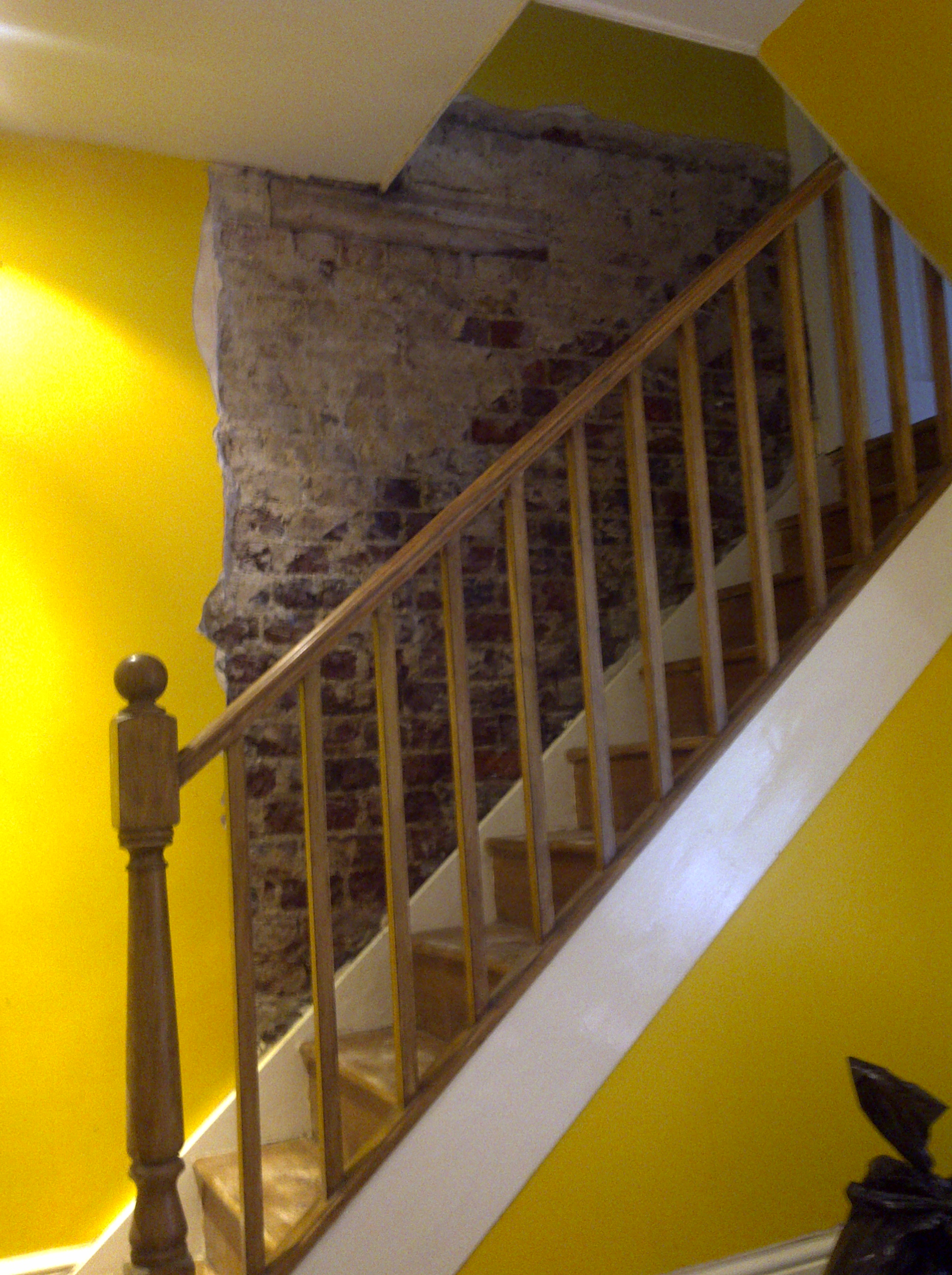
The last straw with the insurers was their response to our final letter of complaint about what had happened.  They were mystified that we didn’t feel they’d done everything possible – despite the fact that 12 months on from lodging the claim our kitchen looks like this:

Home sweet home

They went through each point of our complaint and showed us that at almost each stage their actions were absolutely in line with company expectations, and in the few areas where they had fallen short  teams would be given feedback on how to improve. Our actual experience of what it’s like to deal with them was outweighed by their confidence that the  systems they had set up had worked as intended.  There was such a total failure to see the situation from their customers’ perspective that it would have been funny – except it leaves me still hoovering brick dust off the stairs.

The customer defection capital of the West

The  focus on internal business process rather than the actual experience of real live customers must be the very definition of bad customer service.  Complaints, though difficult to hear, should be  valuable in showing where systems are failing.  They’re not personal assaults to be fended off at all costs.

Insurance companies – like any other businesses – should think about the cost of customer churn  to their bottom line. The Institute of Loss Adjusters has a piece on its website describing the UK as the customer defection capital of the West – and suggests that insurance companies in the UK are worse than their European or US counterparts for the rate at which customers decide to move on.  They should bear in mind that it costs  more to recruit a new customer than it does to retain an existing one.  Good customer service is how you hold on to customers who are otherwise willing and able to take their business elsewhere.


Dodging the Thieves, Ducking the Fraudsters

pickpocket

I lose count of the spam emails I get every day,  enticing me to click on suppurating links so that they can ooze viruses all over my hard-drive, or  phishing for bank details so that they can take a crack at my account.

I was called this weekend by Argos credit department to double-check that I had actually applied for a credit card with them (I hadn’t) and really did want to buy a new telly (nope).  That call came a few days after my husband had a letter from another credit company thanking him for opening his new account and wishing him happy shopping (that was fraud too).  There is  – be warned – currently a spate of fraudsters lifting contact details from entries at Companies House and using them to get unauthorised credit.   (You can, by the way protect your file at CH with their PROOF service)

I hate answering the land line  these days because the only people who ring it are cold-callers trying to interest me in buying a time-share or rook me out of compensation for mis-sold PPI.   And I’m bloody sick of it.  Sick and tired of the whole chiselling, weaselling, cheating,  swindling, thieving, fiddling, diddling, shyster pack of them.    Tired of being treated like a know-nothing no-mark whose money is up for grabs by any fraudster who fancies dipping a hand into my pockets.   A pox on them all.

Like Peter Finch in Network, I’m mad as hell and I’m not going to take it any more.  Except of course I am.  Because seemingly the only way to stay completely untouched is to get off email all together, revert to writing letters and hope that clients will appreciate a slower and more contemplative service.


Recruiting babies in the war against anti-social behaviour


Babies of the Borough

I’m not entirely sure how I feel about being watched by larger-than-life sized babies as I wander down the high street at night; but painting security shutters with the faces of real babies is an intriguing idea which might offer an answer to calming down anti-social behaviour on the high street.  

Could a baby stop a riot?

The idea hit the headlines last year when shopkeepers on a street in Woolwich had their shutters painted with the faces of  local babies by a team of  graffiti artists.  The street had been hit by looters in the riots of 2011 and owners were willing to try anything which might calm down tension in the area.   The idea is based on the principle that seeing babies’ faces stimulates a caring response in the brain  – hopefully acting as an antidote to more  violent or destructive impulses.  I guess it also helps to make the area look cared-for and connect it to its local community – a small visual nudge in the right direction.  The campaign was run by comms agency, OgilvyChange, there’s  a bit more info here.

I heard about the Babies of the Borough campaign thanks to someone in the group trying to revitalise the Roman Road.  We have more than our fair share of ugly, graffiti-ed shop shutters on the Roman, and once the shops shut – especially on dark, winter evenings – it can feel pretty hostile.

Would it work on Roman Road?

There is official Tower Hamlets guidance on what security shutters in the borough should look like:

Shopfront displays that are well-lit and visible after hours deter vandalism and theft and encourage people to use the street at night. Shopping areas become more attractive and livelier, making the Borough a better place to be.

For these reasons, the Council encourages the use of open mesh type roller shutter grilles, or perforated steel that is powder coated in a colour and curved to discourage graffiti. For best results these can be
set behind the glass.

For environmental reasons I’m not wild about the idea of shops being lit-up through the night, even if it does make the street less threatening. And the idea that the shutters should be behind the glass was ridiculed at  a recent public meeting – for the very obvious reason that while they might be able to protect the inside of the shop from burglars, they won’t stop anyone heaving a brick though the glass  just for the hell of it.  So, I wonder if babies might be the answer?

Young people and politics – not just a photo op

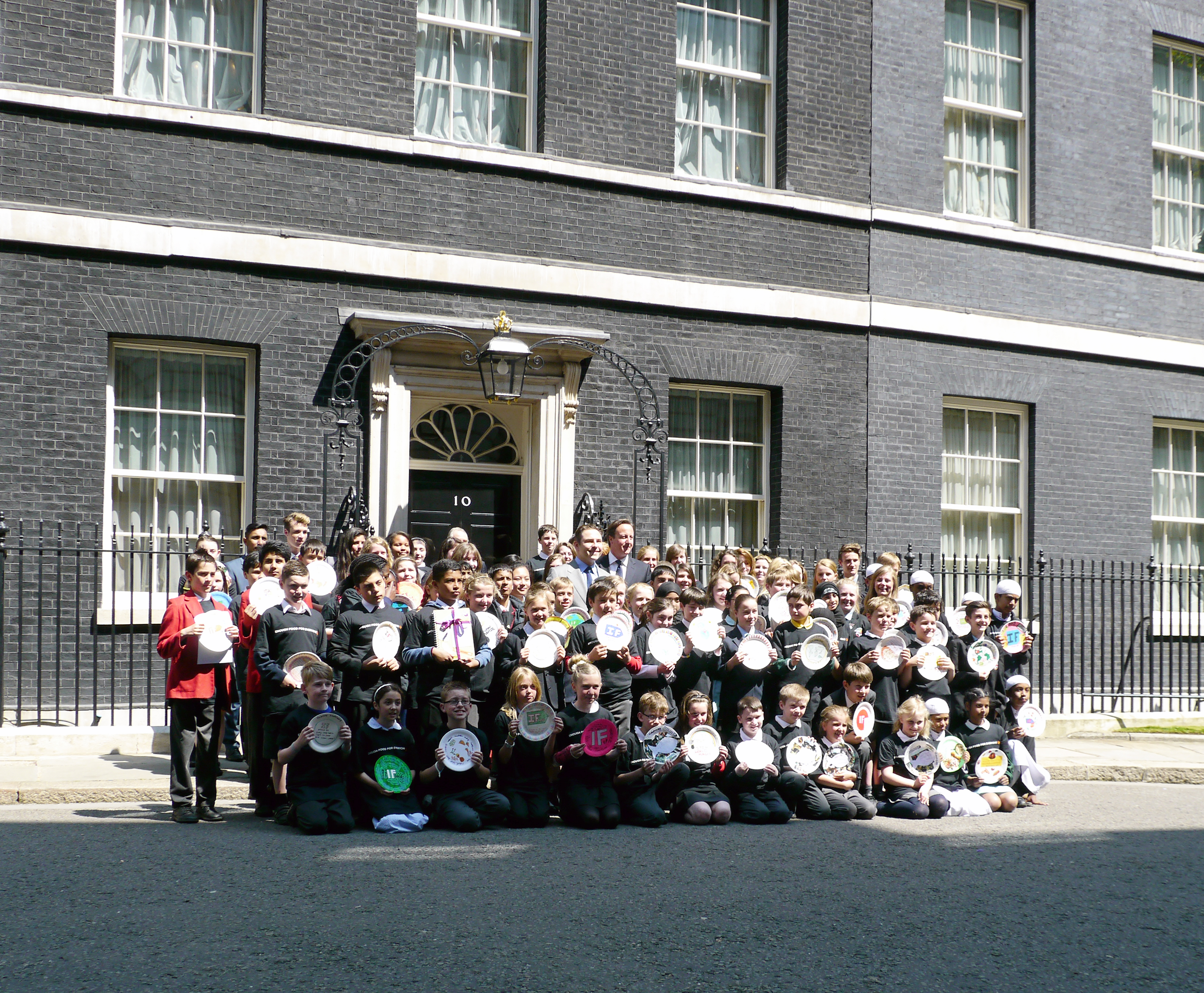
School delegation for If campaign

Yesterday this group of young people went to Downing Street to meet the Prime Minister. as part of the Oxfam “enough food for everyone”, If campaign.  When they got there they were kept waiting without explanation, not given the time to put their (pre-submitted, vetted and approved) questions to the PM and herded about by some aggressive PR handlers who really wanted to get the picture op over and done with. The questions were fielded instead by actor David Walliams who was there too – and handled the whole thing with aplomb, apparently.

I know this because my daughter was part of the delegation.  Her opinion of Mr Cameron – admittedly not high to start off with – has dropped a few more notches. Her cynicism about politicians has been reinforced.  I really hope that Oxfam got some pictures they can use – it’s a great cause.  Equally,  I really hope that No 10 don’t ever trot these images out as an example of successful engagement with young people.  I’m sure David Cameron has many, many important things to do in his day. Finding time to meet young people interested enough in the state of the world to get involved in a campaign like this should be one of them.  I’m equally sure that whenever these guys are old enough to vote they won’t have forgotten the way they were treated when they went to Downing Street.

Women and the politics of getting things done

London 2012

Nicky Roche, formerly a big cheese at the Government Olympic Executive gave the after dinner speech at a networking event I went to the other week.  And jolly interesting she was on the nuts and bolts of putting together an event of such mind-boggling complexity as the 2012 Games.

It was clear listening to her that women played a huge role in delivering the Games, although that was far from clear if you were on the outside of the big  bubble.

“Women were in the second tier,  it was the men who were on the news” she said.  “Women were leading teams and doing it well but were not at the top table.”  And when they had opportunities to shine, like when they were in meetings with the Prime Minister, it was the men who took the spotlight.  “There was a lot of alpha male behaviour.  The men loved it.  I didn’t care.  I was doing a good job.  I knew I was doing a good job. I didn’t mind about the plaudits”.

In questions at the end she was asked how women could tackle limelight-hogging behaviour  by male colleagues.  She was surprisingly ambivalent about whether they should try.  “Men and women have different attitudes to being at the top” she said.  “Sometimes women just value different things”.  She commented that she knows women who have come close to the very top, especially in the Civil Service, but have realised that, for them, it’s not worth the sacrifices involved.

Ironically she then went on to tell some hair-raising stories about working for Margaret Thatcher – it was the day after the funeral and the Baroness was much on people’s minds.  Now there was a lady who had no problem with being at the top.

My younger self would have been appalled at this – I think my current self still is, a bit.  Of course women should be at the top table and if they’re doing the jobs then they should get the recognition (though I can think of more satisfying rewards than a pat on the head from the PM).  Partly I suspect that she’s right.  I too know bright, talented, experienced hard-working women, who are working below their capacity because leaping through the hoops of a permanently on-call senior job that takes them away from their families and other interests just isn’t worth the candle.  Maybe we just aren’t as driven to get to the top as men.  Maybe when push comes to shove we are less prepared to sacrifice family life than them.  Maybe they just don’t feel that they have the choice to hold back.  I know what Margaret Thatcher would say – but then I never really counted her as much of a role model.

On luck, good timing and why I wouldn’t want to be 28 again

Time to lie in the sun
Lotus eating in SW2

I spent my 20s racketing around doing (generally) fun, creative, astonishingly poorly paid jobs, living in hovels.  The flat I rented in Brixton had no heating. In the winter,  getting dressed to get into bed often involved putting on more layers than getting dressed to go out.  It did have lots of cupboard space but none of it was usable because of the mould on the inside.  If you pulled the bedroom curtains too hard you dislodged the curtain poles, which were tied with string to nails knocked into the wall.

It was the last in a long line of shared houses and bedsits which took me  from leaving university to buying a place of my own; which I did when I found someone I wanted to settle into domesticity with.  Fortunately, this happened at the end of  the last recession – at just about the last time in the history of London when it was possible to buy a house in Zone 2  on one person’s salary (he was out of work at the time) without robbing a bank first.

They do things differently now – they have no choice.  I was in a meeting yesterday with a successful 28-year-old professional who lives at home with his mum.  He’s saving for a deposit on a flat and could probably just  afford it now, but doesn’t want a 90% mortgage,  because he wants to be sure that he will have paid his mortgage off before he’s 55.  This is alien on so many levels.  

Apart from anything else, when I was 28 it never occurred to me that one day I would be 55.  I’m not sure I was unusually feckless, maybe I was, but planning – for mortgages, middle age, retirement wasn’t something I  ever thought about.   I would have been horrified by the idea of having to go home after university and live with my parents – however much I love them, and however comfortable their home was. There were places to rent when I needed them and if I ever thought about the future at all, I had a vague expectation that when I was grown up enough to want to buy a house, I’d have scrambled far enough up the jobs ladder to be able to afford it.  

My timing in life has always been impeccable (I claim no credit for this).  Among the first generation in my family to be able to go to university, I had a grant and supportive parents and came out with an overdraft which seemed monstrous at the time, but was laughably small compared to a student loan of £9k pa.  I left university at a point when there were jobs for graduates to do and affordable (if scuzzy)  places to rent and be independently foolish in ‘til something better came along.  

There’s a thought-provoking piece in today’s Guardian about demographic change and what it means for universities which includes this:

Commenting on patterns of immigration in the US, Jack Donaghy, in the TV comedy 30 Rock, puts it this way: “The first generation works their fingers to the bone. Second generation goes to college and innovates new ideas. The third generation goes snowboarding and takes improv classes.”

I feel like I’m part of Donaghy’s third generation.  My colleague – and my children, although they’re a lot younger than him – aren’t so lucky.  They’re so much more grown-up than we were at their age.  So aware that life is hard, so much more constrained.  Thank God I’m not 28 any more.  

5 Tips For Delivering Good Customer Service

Drying out the walls

Five pieces of free advice for customer services departments, hard-won from five months dealing with my buildings insurance company…

1.  Make it easy for your customers to talk to you.  This is  the 21st century.  Embrace it.  Use email.   If you INSIST on using snail mail to conduct your business, build in some way of letting people know that  letters have arrived – you could do it via email!

2.  One person dealing with an issue helps your customers feel more secure.  Insurance claims can be complicated and take a while to sort out.  It would help your customers’ blood pressure if they had one person to deal with, rather than having to repeat the same information every time they speak to you.  Oh, and sending out letters giving the name of “your personal claims adviser” and sending a different name every time doesn’t help.  

3.  Keep your customers informed.  If they’re contacting you about a building insurance claim, something drastic has happened to their home.  That’s their biggest asset and the possession in which they have most invested emotionally as well as financially.  They want to know  you’re on their side.  They want to know what’s happening and they want to understand a process which they might never have had to deal with before.  Tell them what’s going on.  Don’t make them chase you for information.  Don’t assume they know what’s going to happen.  Put stuff in writing.  There is more information on my insurers’ website about how to buy a toy version of their  mascot than there is about what might happen if you need to make a claim.

4. Make it easy for your customers to tell you how they feel.   I mentioned the fact that I didn’t know what was going on with my claim when I was on the phone to them a couple of weeks ago – just after I’d had a phone call out of the blue from a “disaster recovery company” confirming that they would be coming to the house the next day to install their equipment.  I’ve now had an email request  to give the insurers the details of my “complaint” so that they can improve their service in future.  Which is nice.  Except the email just links to a standard multiple choice form about how satisfied I was (or was not) with the member of staff who dealt with my complaint.  It’s not the staff I’m worried about, it’s the  process that needs changing.  There is nowhere for me to tell them what I’m concerned about. It looks like a tick-box exercise, not a serious attempt to engage with a problem.

5.  Communicate  Actually all of this boils down to one piece of advice.  Communicate with your customers.   Put yourself in their shoes.  Mentally walk through the process your company asks your customers to go through when they deal with you.  What would you like to know at the beginning, middle and end of the process?  How would you want to be dealt with while it’s grinding on?  Do that.  It’s not hard.  A nodding dog should be able to do it.

Michael Gove and facts, facts, facts

According to this morning’s Guardian, Michael Gove is to make a speech claiming that rote learning is the key to success in education:

Competitive, difficult exams for which pupils must prepare by memorising large amounts of facts and concepts will promote motivation, solidify knowledge and guarantee standards.

Now, you could reach for the Dickens and quote Gradgrind to discuss this.  Or you can go a bit further back in time and let William Hazlitt debunk it for you:

William Hazlitt self portrait 1802

“The things which a boy is set to learn at school and on which his success depends are things which do not require the exercise either of the highest or the most useful faculties of mind.  Memory … is the faculty chiefly called into play, in conning over and over repeated lessons by rote… A lad with a sickly constitution and no very active mind who can just retain what is pointed out to him will generally be at the head of the form. ” (From  On the Ignorance of the Learned, 1820-ish)

And given the subject of the feature article in G2 on Eton and the old boy network, it’s worth remembering that Hazlitt also pointed this out – almost 200 years ago:

 It should not be forgotten that the least respectable character among modern politicians was the cleverest boy at Eton

Digital by default – mind the generation gap.

I recommend everyone,  from comms strategists and policy wonks to the merely socially curious,  take a look here  for a fascinating overview of British social attitudes in 2012, compiled by Ipsos Mori.

The research was presented at the Government Communications Network  last week and generated a flurry of startling factoids on Twitter – like this one:

more children between the ages of 2 and 5 can use a smartphone than can tie their own shoelaces.

There’s a mass of useful information for planners in the report.  I’ve  gathered together some of the insights revealed during the debate which highlight some important trends and generational differences:

  • On average each UK household owns 3 different types of Internet-enabled devices
  • For the 1st time, over half (52%) of all calls are made via mobile phones
  • Big differences in methods of communications: 16-24s heavily text reliant. Over 65s opposite, voice-based
  • 1/3 of 16-24 year olds live in a mobile-only home. More than double UK average of 15%
  • 8/10 people in UK have Internet access. Figure drops for over 55s
  • Implication is of increased polarisation between young and old. Rise of the smart phone. Texting as a mass medium.  TV remains strong. Young people are switching off the radio. Post is still v important to older people
  • BT and Virgin’s superfast broadband services were available to around 60% of homes by March 2012

It’s clear  that a broad mass of people of all ages are perfectly comfortable in an online world and have multiple means of accessing it.  The generational divide isn’t as clear cut as you might think – here are some more statistics, from the Forster Company’s overview of age in the UK:

  • 47% of 55 – 75 year olds connect to their friends with either Skype or instant messenger services
  • 45% of 55 – 75 year olds spend up to 30 hours on the internet a week
  • 33% of over 55s use social networks
  • The fastest growing group of Facebook users is aged 50+

We’re not all digital natives yet

But it’s  also  clear that while many of the over 55s are fine online,  a significant minority aren’t – yet.  That’s an important issue for policy-makers.  Time will eventually iron out the difference until everyone left standing is a digital native , but we’re not there yet.  This makes the government’s strategy of making public service delivery “digital by default” by 2015 look slightly optimistic.

If people have to access the services they need online, what happens to those (currently 20%+ of the over 55s, according to the Ipsos Mori research)  who don’t have internet access?

If people over the age of 65 are more comfortable with having a conversation than dealing in “text-based communication”, how easy will they find negotiating an online application form for vital services like pensions or social care?

The recent story about the shortcomings of the helpline for the Police and Crime Commissioner elections didn’t inspire confidence:

[A whistleblower]  who is working at an Electoral Commission call centre dealing with queries about the election, told the Guardian that he spoke to hundreds of older people every day who could not access the information online. They were referred to a “very temperamental automated phoneline” at the Home Office, and then were only given a list of names and no real information”

And how long will it take before superfast broadband is available everywhere so that online applications can be done speedily even in remote rural areas?