The value of free

Copyblogger is running  advice on putting together the “ultimate marketing plan” from the man they call one of the world’s highest paid copywriters.  A day or so ago the same site carried a slightly finger-wagging post about how much fantastic professional advice is sitting online, read once but never acted on.  I’m certainly guilty of spotting great stuff, inwardly muttering that I’ll do something about using it one of these days, filing it in my “great stuff” folder and never looking at it again.  But no more.  As the man said, if I’d paid for this advice from a consultant I’d be doing everything I could to  squeeze the last drop of value out of it, so I’m going to blow the dust off the folder and get cracking on sharpening up the plan for the business.  So, as a  start, here are four basic tips for maximising the use of LinkedIn and Facebook as shop-windows for your business, and one suggestion for managing what could be a time-swallowing commitment to social networks – gathered here, here, here and here

1. The value of LinkedIn is in direct relation to the size of your network. Maximise your potential connections by keeping a link to your profile as part of your email signature.

2. Use your presence on the network to showcase your expertise – join relevant groups, comment on (and start) discussion threads, answer questions

3. Use the search facility in LinkedIn to check out potential clients/employers to see if you can get any useful information about them from elsewhere in your network

4. Publish your content – you can set it up for blog posts to be posted automatically to  your LinkedIn and/or Facebook profile, for example

5.  Estimate how long you have to spend in a week in keeping up a presence online and plan out the content you want to post in advance.  The suggestion is to take half an hour a week in writing up “helpful tips” and then scheduling it to be published.  This seems both more mechanical and more perfunctory than I feel comfortable with, but certainly more structure would probably mean fewer gaps in between posts.


5 things to remember in between jobs

As I secretly knew it would, the job drought has ended and I’m back fretting about  having to work through the weekends again.  This seems like a good time to jot down some hard won advice about dealing with slumps – not least so that I can read it back when the next one crops up.

1. Jobs travel in packs and use unreliable forms of transport.  It’s perfectly normal for there to be gaps between jobs and then for people to be  falling over themselves to snaffle you up.  I’ve never met a freelancer yet who was busy all the time (and wasn’t lying about it).  Keep a spreadsheet of your work patterns and you’ll see that troughs are inevitably followed by peaks (and vice versa) – nothing lasts forever.  This can be quite comforting when the cupboard is bare, and fooling around with the spreadsheet on quiet days can almost feel like work.  Although…

2.  No-one can job-hunt for 24 hours a day, even though it is tempting to try.  With LinkedIn and other resources on tap you can fool yourself that you’re doing valuable things  just because you’re at the computer.  If you have really exhausted all the leads you can think of (and aren’t just avoiding  another awkward call) give yourself permission to go away and get a life.  Play the piano, contemplate painting the bannisters, torment the cats, leave the house and do something exciting you can use as raw material for your blog.  Remember that one of the reasons you probably had for going freelance in the first place was to kick the “life” part of your work-life balance back into action.

3.  However tempting, don’t take the first job that comes along just because it’s a job.  If it doesn’t fit your core skills or add something to your business it will just end in unnecessary unpleasantness.  Having just done this (again) and with the bruises to show for it,  I am aware that this is a hard one to learn.  Avoiding doing crap jobs was another reason I went freelance and is the reason that I…

4.  Put away a slug of money out of each pay cheque  to act as a cushion when the slumps come along.  This also allows you the smug glow that comes with saying “no” when someone asks if you’d like to do a crap  job,  and it helps deal with point 5…

5.  It ALWAYS takes longer to get work sorted out than you think it possibly can.  Potential clients are always just jetting off on holiday and promising to “pin things down when I get back”,  or need budget approval from a finance committee that meets once a quarter in alternate leap years, or just get tied up in meetings about other things.  The thing to remember is that, eventually, you will work again – and if you doubt that go back to point 1 and start again…

Belts will be worn tighter this year

(But only by some)

At the risk of committing career suicide by teasing COI, I thought the NIB in this week’s PR Week summed up everything you need to know about  how things work in Hercules Road:

COI is being restructured around six client themes.  A briefing from the COI suggests that the reason is planned cuts in public spending.  The move will see the COI make 12 new appointments – six group directors and six group strategy directors.

Politics and Procreation

Anyone who has ever studied history or read almost any novel written before 1900 will know that marriage has always been a contract about property and money, with romance a very poor second.  What absorbed Moll Flanders and appalled Edith Dombey was the knowledge that the only way a woman could enjoy status and security was to snag a solvent husband.  Single women didn’t count.  Divorce was beyond the pale. (Winter being a time for long evenings reading classic novels, I’ve been up to my neck in corsets and corsages since before Christmas. The references will get more contemporary as we get closer to Spring).

Fortunately families have evolved since the 1840s, although politicians don’t seem to have kept up.  This morning’s radio scrap between Ed Balls and David Willetts,  about whether or not it’s worth paying people to get married, was infuriating for its reactionary (Tory) assumption that the only families that count or work are married ones,  and the patronising ( both of them) assertion that government knows what’s best for families.

The magical properties of marriage have always baffled me.  I got married for tax reasons, so maybe the Tories have a point –  finance can work as a stick to drive people towards the registry office.  Whether or not you should wield it is a different matter.  We were together for ten years before we married and we had two children.  I felt not one whit more committed to the three of them after I had a ring on my finger than I did before and I defy anyone to tell me that we weren’t  a “proper” family during the time we were living in sin – which sounds so much more exciting than the reality of nappy rash and teething rings.

There is a job for government on this issue.  But it’s around dispelling the myths that surround “common law marriage” rather than frog-marching couples up the aisle.  Let the unmarried know their rights (or lack of them) to property and pensions or decisions affecting their children.  Then butt out.  Let us make our own choices about how we want our families to be and leave us to get on with it.

Art, history, dentistry

Staggering back from the dentist with a face full of novocaine, I found myself yet again pondering the world’s greatest mystery – why do people become dentists? 

Lord knows I’m grateful that they do.  My juvenile CurlyWurly obsession coincided with the dark ages of British dentistry and I’m grateful for how much better it’s got every time I go to get a substandard filling repaired.  But still, why do they do it?  Want to help people feel better and remove pain?  Be a doctor.  Get off on seeing people gibbering with fear and drooling when they come to see you?  Become a tax inspector.  At least then you won’t have to listen to a drill all day.  Fancy the idea of sculpting very small things in a confined space?  Go to art school.

Anthony Gormley: Field

I’ve been trying to think of heroic dentists of the past who might act as role models,  but nothing comes instantly to mind from life or the movies.  Heroic doctors galore, of course.  Even tax inspectors have that guy in The Untouchables who helps Kevin Costner nab Al Capone.  But dentists?  The first film featuring dentistry that most people could name off the top of their heads is Marathon Man, and if you’re encouraged to take up the probe after seeing that, there are probably laws to stop you.

The only dentist-hero I can think of was created by the late and much missed Alan Coren.  After a dashing spell in the foreign legion, azure-eyed, blond-haired Garth Genesis fixes the Prime Minister’s teeth and eventually becomes Foreign Secretary, while lovelorn beauties queue up in his waiting room for the chance of a consultation.  But apart from him what’s the attraction?  It’s not a question I feel I can  ask while I’m there.  It might sound as though I think they’re doing something shameful and slightly weird, which is not a good position to be in when you’re there with your mouth open and they have an armoury of pointy metal things in easy reach.

1966 and all that

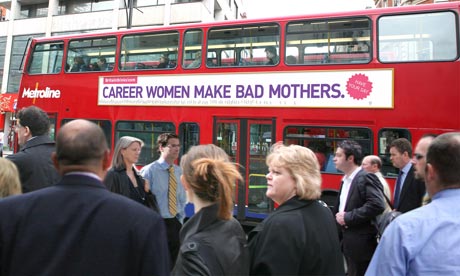
The spoof 1966 ad has been  on a billboard across the road for a couple of days now.  It makes me smile everytime I see it, although I never did get round to looking up the weblink to find out who was beaming these calming thoughts at my husband and son.  I missed the row about the other spoof ad  – the working women should all be shot one –  until it had all blown over and I stumbled across it on Twitter.

This proves either that a) advertising isn’t as important as the agency wanted to demonstrate; or b)  it is, and the Mumsnet row amply demonstrates the point; or c) it only works when backed up with word of mouth – nowadays massively amplified by Twitter and other social networks;  or d) I’ve been confined to the house by snow and anxiety for much too long and need to get out more.

Spoof advertising isn’t a new tactic, of course.  The Guardian launched a  range of non-existant products when online retail really started to take off, to try to prove that people would sign up for anything if it had a website attached.  And 1966 has been scooped in the spoof advertising stakes this very month by those hilarious  “We can’t go on like this” ads featuring the lollipop-headed David Cameron and some vacuous verbiage about not cutting the NHS.   Hats off to them for testing the boundaries of the medium, of course.  But can’t help thinking they need to hire someone who knows how to use photoshop and a copywriter (and a policy advisor) who might really be capable of making Britain think.

Blogger’s Block


Flickr: Bianks

Have been suffering a bad case since October, brought on first by overwork, then by Christmas, and lately by the absolute certainty that I will never work again, which has reduced  all waking thought to “how long can we last on the money we have before we have to start eating the cats?”

Admittedly I am prone to panic about this kind of thing, and have to keep reminding myself that it’s not long since the holiday season ended, and it’s quite likely that at least one of the three prospects I’m waiting on will come off and I’ll back to complaining about overwork by the end of the month.  This does feel very different from last year, though. Usually, in the public sector, the last three months of the financial year are  manically busy as departments realise they have to use the under-spend they’ve been hoarding against a rainy day before March 31 or they’ll lose the money.  This year it’s ominously quiet on the government front and the cats are starting to look tastier by the day.

Note to self

Stooging around the web this afternoon looking for nothing in particular I found this, which links to this site, which is a really useful idea and something I should do soon.  And so should you.  Now, excuse me while I go and sort out that hippo.

Mothers need not apply?

Odd that I missed this story about how important flexible working is to working mothers because it’s been on  my mind a lot recently.    I’m my own boss which means I can  manage my own hours and  can fit in a life with children as well as one with a briefcase, a blackberry and a business suit.  A few days ago, I was offered an opportunity which looked so great, at such a fantastic company, that it was impossible to pass on it just because it would mean taking a job and joining the rush hour rat race again.  I met them.  I liked them.  They liked me enough to ask me back for a second interview before I’d got home from the first one.  Then I started talking about the details of what what flexible working might look like in practice and suddenly there’s total silence from their end.  Now, I could be being  unfair.  Too impatient to do the deal and too ready to conclude that it’s not going to happen. I really hope so because it’s a great opportunity and I’d love to do it.   Or I could have just reinforced my sneaking suspicion that the only way to make sure that I can work and spend time with my children  is to run my own show.  This is easy enough for me thanks to the industry I work in.  How does everyone else manage?  No wonder the fastest growing sector in the economy over the past few years has been in women-owned small businesses.

Political reality and the NHS

The McKinsey NHS story might be an illustration of what a surprisingly tin ear many very smart people have when it comes to basic politics. Or it could just show how very simplistic political debate has become.  Cutting 10% of NHS staff  maybe an intellectually brilliant way of dealing with a funding problem in the health service (personally I don’t think it is, but let’s give McKinsey’s bright young things the benefit of the doubt).  However it would be so politically damaging, so completely devastating to any governing party’s claims to be trustworthy custodians of a public health service, as to be impossible to  enact.  The press coverage I’ve seen is all focused on this element of the report and the condemnation is pretty universal.  However, if you look at the Health Service Journal’s summary of the story, McKinsey recommend much more than just taking an axe to staff numbers.  A lot of what is being floated seems unpalatable but possibly unavoidable if the NHS is to survive – we should at least be talking about the options honestly.  Instead the government have instantly disowned the document ,  the opposition are scoring cheap  political points, and everyone gets to vent some rage about the use of consultants in the public sector.  Thanks chaps.