Shoulders down, back straight

Fed up of swearing and wincing in pain every time I get up from my old office chair, I went to buy a new one the other day.   Apparently it’s not just the chair, it’s the desk, my husband (he’s too tall, so the desk is too high for me – although it’s still too low for him), my computer (laptops are notoriously bad for giving you a bad back) and the length of my arms that’s wrong.  So I don’t just need a new chair, I need an electronically adjustable desk, a chair with a gas-lift, a laptop arm, a wireless keyboard and new mouse, a footrest and possibly a new husband before I can rise gracefully from my desk again.

If I had a decent employer I’d threaten to sue and have occupational health round faster than you can say compensation.  As it is, I’ll just have to scrabble down the back of the ergonomically unsound sofa for some spare change and put up with the fact that the corner of my house that serves as my office will soon look like the flight deck of a space ship.

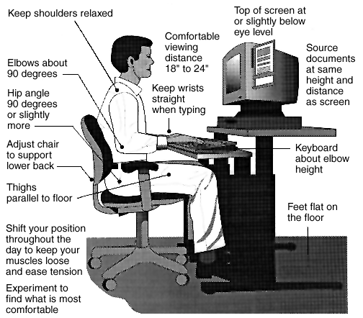
For anyone else with the same problem, here’s some advice about how to sit (it sounds so simple…).  If your problem is marital incompatibility I’m afraid you’re on your own.

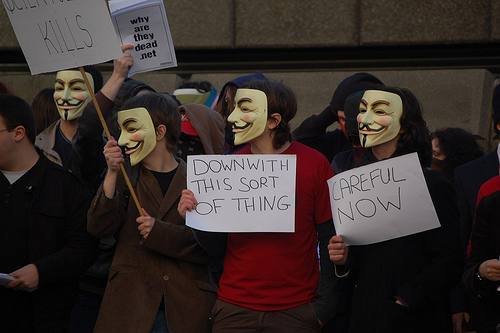
The people have shrugged – the bastards

Came away from last night’s programme about reconnecting people with politics sadly disappointed that as an electorate we are badly failing our MPs.  It’s a wonder they can find the will to carry on.

We don’t go to their meetings (possibly because when we do we get harangued about doubting their integrity).  We don’t vote. We don’t respond to their blogs – although that side of the experiment seemed to die as soon as it was born and, as any fule kno, these things take time.  Not even Chris Brogan could build a vibrant blog community in a few weeks.   (And is anyone else as irritated as I am with the number of MPs who just use Twitter as an advertising channel for their activities?  Tom Harris, an MP who knows how to do these things, had a great blog post a while back with top tips for political tweeting which started with : 1. Don’t just broadcast – engage. Politicians who use social media to let everyone know what they think but who don’t even respond to others’ views are doing themselves no favours.  Quite right too.)

Anyway, back to last night’s MPs.    According to Ann Widdecombe we don’t even care enough to tell them what it is we don’t like so they can do something about it. (“They just shrug… I’ve been facing it for years… The shrug“)

Well, Mark Oaten found plenty of things we seem to think and not like about politicians, (“boring, egotistic, in it for what they can get, useless, lying, deceitful, full of waffle…”)perhaps they could start by addressing those, and realising one of the basic rules of communications – it’s not your audience’s fault if your message isn’t getting through.

Admittedly it’s hard to reflect the reality of several weeks’ events in one hour-long programme and perhaps the MPs were just badly served in the edit suite.  And I do have sympathy with MPs  (some of my best friends…) who on the whole work incredibly hard for little thanks on some intransigent social problems and seem genuinely motivated by a desire to do good.  At the moment they do seem pretty unhappy with their lot, as they fight against a corrosively cynical press and a strange uncertainty about their role.  In our highly centralised, party-dominated, control-freaky political system what is a backbench MP for?  Legislator? Holder of government to account? Lobby fodder? Social worker?  Maybe that’s the question they should be trying to answer, before they start worrying about why we aren’t engaging with them.

Why don’t you…

The infallibly interesting Seth Godin has a post today about why he doesn’t watch TV any more and lists all of the things you can do instead, now that there’s so much more choice of things to do in your spare time.  I was struck by the fact that all but a couple of his “new” choices have existed for years – I admit that running a store on eBay or starting up an online community do depend on a degree of 21st century connectivity, but most of the others are just slight variations on things my mother used to tell me to do when I was loafing around the house as a teenager and she thought I should be doing something more productive.  (This might mean my mum is a visionary marketing guru who was  years ahead of her time, but I doubt it.)

I don’t watch a lot of TV when it’s broadcast now because I’m working/my kids monopolise the remote in the early evenings and there’s only so much Hannah Montana a grown woman can take (Phineas and Ferb is good, though)/I’d rather read a good book/I watch stuff I like on DVD when I can watch it in satisfyingly long chunks rather than rationed and with adverts an hour a week.  But most importantly because I don’t find most of what’s on that interesting.   Even when I worked in TV ten years ago it was clear that the really creative, bright young things were gravitating much more towards what might be possible online than what could be done in a TV studio.  So not only is TV suffering from an increase in competition for its audience’s time, for me at least, it’s also suffering from a lack of  really strong content to fight back with.  So, all together now, why don’t you just switch off your television set and go out and do something less boring instead?

Don’t just sit there – write something

This week I have mostly been feeling ill.  Not hovering at death’s door ill.  Just out of sorts and sorry for myself and unable to concentrate.  This is the worst state for a freelancer – too bad to want to work, not bad enough to give in gracefully and take to bed; just guiltily hovering between sofa and desk nostalgic for the days of proper employment, when being ill meant the novelty of being home alone in daytime (and you still got paid).

Anyway, I have work to do hanging over from last week which can’t be allowed to get in the way of next week.  So I’ve been sitting here for two hours on a Saturday afternoon and I have:

  • spent quite a lot of time on wordoid trying to find a new name for the business
  • spent more time on LinkedIn searching for old friends from university and deciding whether I want to get back in touch with them or not
  • ditto Facebook
  • marvelled yet again at the vacuousness of most of Twitter, and looked at lots and lots of tweets to prove  that I’m right
  • repeatedly put work-related search terms into wonder wheel to create ever lovelier and more complicated networks than I will ever have time to do anything with
  • changed the theme of the blog – bored with the old one, not sure about this one, might change it back soon
  • written 263 words of this blog post (in about ten minutes) which is 144 more words than I have managed to put into the piece of work I’ve been doing since 3 o’clock
  • found the procrastinators’ blog 

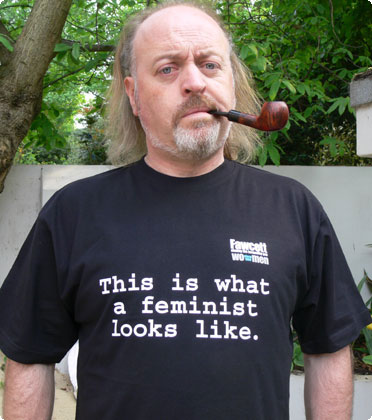
Of course I’m a feminist – who isn’t?

Pic: Fawcett Society

For International Women’s Day, a favourite picture of the ideal of feminism. (I have the t-shirt too, but look nothing like as good in it).  More pics, campaigns and info at the Fawcett Society

Being a good client

How often do you treat yourself as a client and give your business a full MOT?   I did some work over the summer with  clients who are also by now good friends, who took advantage of a quiet holiday season to review their business.  On the outside it might have looked like  un-necessary tinkering on their part – the business was already in pretty good shape and growing  fast.  Still, we worked on re-defining the core of how the business had changed since it started and what that meant for the services they were offering and the language they used to talk about themselves  – treating their business with the same kind of rigour we would offer a “proper”  client.  They carried on the work through the autumn and have just re-launched.  I was so delighted to see the fruits of what we started off, not a huge change, but a sharper focus, a clearer offer to potential clients and  a more confident feel for the future.   Try it on yourself – as long as you’re prepared to be completely honest about what’s currently working and what isn’t, it can be a really revealing exercise.  And yes, I really need to do it for myself too.

Michael Foot

I’m not usually in the business of political obituary but I’ve been moved by the tributes to Michael Foot as a man of wit, passion, intellect and principle.  And I loved this quote, which should be emblazoned across the front of the Labour Party website and stitched onto the rosettes of every prospective candidate.  It won’t be, of course.  It might upset the City.

We are not here in this world to find elegant solutions, pregnant with initiative, or to serve the ways and modes of profitable progress. No, we are here to provide for all those who are weaker and hungrier, more battered and crippled than ourselves. That is our only certain good and great purpose on earth, and if you ask me about those insoluble economic problems that may arise if the top is deprived of their initiative, I would answer ‘To hell with them.’ The top is greedy and mean and will always find a way to take care of themselves. They always do.

Saving the world one click at a time

Fllickr: Sean Stayte

I’ve received several requests to sign online petitions to Save the BBC.  The petitioners seem to think that any cut to the BBC is an absolute outrage to be resisted until death – even if it is being proposed by the BBC itself, which does have a vested interest in its own survival.   In classic BBC fashion, they seem to have chosen the wrong things to cut – the good bits that the market isn’t  providing – but I can’t see that it’s wrong to admit that the BBC can’t do everything and scale back.  A pre-emptive strike against cuts being imposed from outside, perhaps? (And personally I hate and rarely use the BBC website, so big, so bland, so smug.  It should have been pruned years ago).

I haven’t signed the petitions, although I love the BBC for all its faults.  It’s the fizzing outrage of the emails that puts me off.  There’s no nuance in the argument, no recognition that there may be more than one side to be considered.  At least one of the organisations that petitions me for support, regularly asks for suggestions as to what I want them to protest about next.  It’s  as though it’s the  act of complaining that’s important,  the opportunity to vent about everything that’s wrong in the world, rather than doing the difficult and often dull work of bringing about real change.   A classic armchair warrior, I’ve clicked yes to petitions for Amnesty, Reprieve and Friends of the Earth,  pro-democracy in Burma, anti-homophobia in Uganda and  lots more that I can’t remember.  What happens to it all?  Is this real democracy in action, or  knee-jerk populism?  And, as one post on the Guardian’s 6Music story remarked, is it just me, or are Facebook and Twitter now running the country?

Working out what to charge

Flickr:tachyondecay

What are you worth?  Over the last few days I’ve had an invitation to lunch and a couple of calls from friends who are going freelance and want some tips – a sign of what’s happening in the industry, perhaps?  They all seem to want the same kind of advice about how to set up and – most of all – what to charge.  So here  are a couple of  web-resources which might help them and others get the thinking started.

I like this list of how to generate the business in the first place – Freelance Switch again.  And at the risk of self-referentially disappearing up the spout of my own blog, here’s one I wrote earlier about actually getting paid

The most important thing I ever learned

As a PR the most valuable  advice I was ever given was  “never assume anything” which beats  “there’s no such thing as off the record” by virtue of applying to both professional and private life.

Both of these lessons were dinned in to me when I was a baby PR  at the BBC, and have served me well ever since.  I’ve been thinking about them recently as I’m interviewing someone on Friday for a magazine feature entitled, natch,  The most important thing I’ve ever learned,  and I’m idly wondering what I’ll say if he turns the tables on me.   I wish my examples were a bit more profound, or more practical – “funny you should ask, Dave, the most important thing I ever learned was how to turn base metals into gold… ”  But no, it’s the simple rules that support the architecture of  a PR’s career.  Turn up on time,  ALWAYS call back,  tell the truth (the biggest row I ever had was when a producer deliberately lied to me about a story, leading me to pass on a lie to a valued contact on the Observer with whom I never had quite such a good relationship again).  Of course this isn’t all there is to it – you have to passionately enthuse about what  you’re doing, be creative about the approaches you take, be constantly open to new ideas and ways of doing things.  But the nuts and bolts of it are frighteningly simple.  I’m assuming, of course, that your lessons are much more impressive…